
 Varad
Varad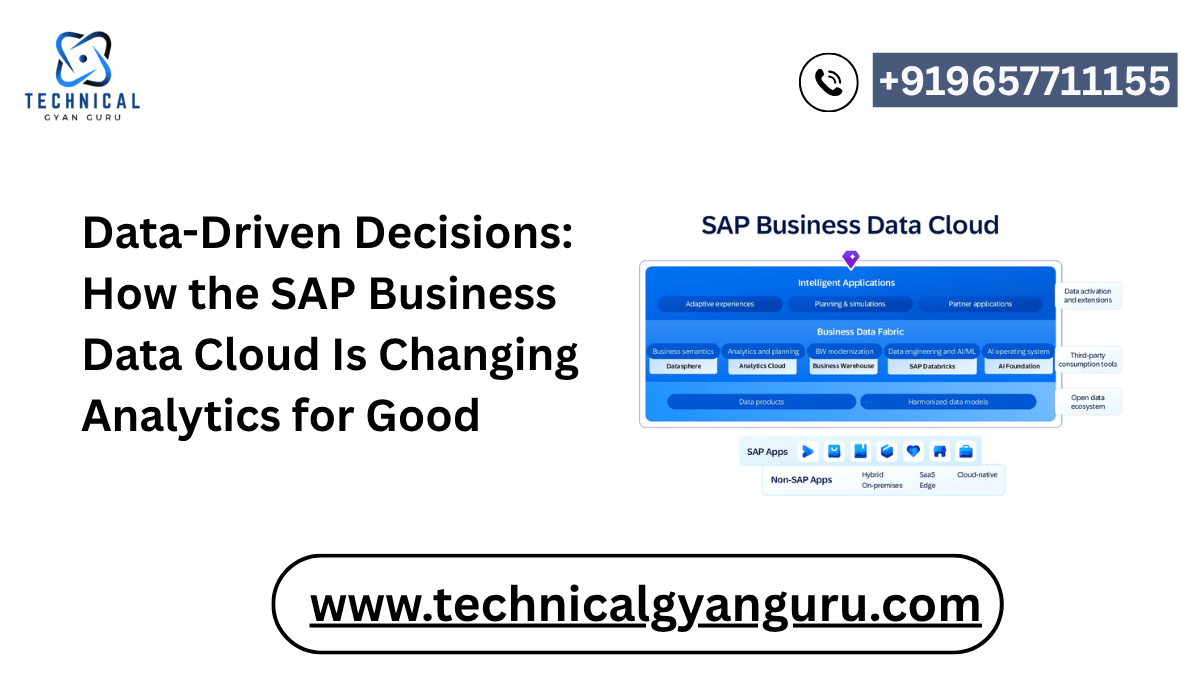
In a world where data is the new currency, the ability to turn information into actionable insights defines the leaders of the digital economy. Yet, for most organizations, the real challenge isn’t collecting data—it’s connecting, understanding, and using it effectively. That’s where the SAP Business Data Cloud comes in, transforming how businesses harness their data to make smarter, faster, and more confident decisions. Designed to unify data across disparate systems, the SAP Business Data Cloud is changing analytics for good by putting intelligence, transparency, and trust at the heart of every decision.
For decades, enterprises have been accumulating vast amounts of information—sales figures, supply chain metrics, employee performance data, customer feedback, and more. But as systems expanded and diversified, data became fragmented, stored across silos that made comprehensive analysis nearly impossible. This fragmentation meant decision-makers were often working with incomplete or outdated information, leading to slower reactions and missed opportunities. The SAP Business Data Cloud was built to solve exactly that problem. By integrating all business data—structured and unstructured—into a unified cloud environment, it enables companies to create a single source of truth that empowers real-time analytics and data-driven strategies.
At its core, the SAP Business Data Cloud is a next-generation data foundation that allows organizations to manage, share, and analyze data seamlessly across different systems and platforms. It brings together SAP and non-SAP data sources into one intelligent layer, making analytics more accurate, transparent, and accessible. This means that data from ERP, CRM, HR, and supply chain systems can be combined effortlessly with external data from partners, suppliers, or even IoT devices—all within a trusted and compliant framework. The result is not just better reporting but a complete transformation in how businesses think about data.
What truly sets SAP’s data ecosystem apart is its integration with SAP Datasphere—the technology engine behind the SAP Business Data Cloud. SAP Datasphere ensures that data remains consistent, connected, and governed, enabling companies to build a comprehensive view of their operations without duplicating or moving large datasets. For example, a global manufacturing company can now bring together real-time inventory data from SAP S/4HANA, supplier data from Ariba, and customer demand insights from external marketplaces—all within the same analytical environment. Decision-makers can instantly visualize production bottlenecks, predict supply chain disruptions, and make proactive adjustments with confidence.
The impact of the SAP Business Data Cloud extends beyond IT departments—it empowers every part of the business. In finance, it enables real-time visibility into cash flow, profitability, and risk exposure. Instead of waiting for end-of-month reports, CFOs can access up-to-the-minute insights that help them adjust forecasts and allocate resources more efficiently. In human resources, leaders can use predictive analytics to anticipate turnover trends, assess workforce performance, and identify future skill gaps. In operations, teams can leverage data-driven insights to optimize logistics, reduce waste, and improve service delivery. Every department becomes smarter, more agile, and aligned toward shared organizational goals.
One of the most compelling aspects of the SAP Business Data Cloud is its openness and scalability. Modern enterprises no longer operate within a single ecosystem—data flows across multiple clouds, partners, and external sources. SAP recognizes this reality and ensures interoperability through open data partnerships with other leading technology providers such as Google Cloud, AWS, and Microsoft Azure. This openness allows companies to extend their analytics capabilities beyond SAP, ensuring flexibility while maintaining security and governance. For instance, an organization can integrate data science models developed in external tools directly into SAP’s analytics workflows, bridging the gap between traditional business intelligence and advanced predictive analytics.
Market trends underscore why this evolution is so critical. According to Gartner, by 2026, more than 75% of large enterprises will adopt a unified data platform to drive cross-functional analytics and innovation. Data-driven companies are already outperforming their peers, achieving up to 20% higher profitability and 30% faster decision-making cycles. The SAP Business Data Cloud positions organizations to lead this transformation by turning data chaos into data clarity. It’s not just about managing data—it’s about using it strategically to fuel innovation, improve efficiency, and strengthen customer relationships.
Security and trust are central pillars of the SAP Business Data Cloud. In today’s data-driven world, compliance with regulations like GDPR and data sovereignty laws is non-negotiable. SAP’s framework ensures that data is handled responsibly, with built-in governance, lineage tracking, and role-based access controls. This level of transparency not only builds trust internally but also strengthens collaboration with external partners. Businesses can securely share selected datasets with suppliers, clients, or regulators, enabling collaborative innovation without compromising privacy or control.
Beyond analytics, the SAP Business Data Cloud is paving the way for intelligent enterprises powered by artificial intelligence and machine learning. With vast, clean, and connected data at their disposal, companies can train AI models to predict outcomes, automate processes, and personalize customer experiences. For instance, a retail chain can analyze purchasing behavior in real time to adjust promotions instantly, while a logistics firm can predict and prevent delivery delays using predictive analytics. The combination of data, AI, and automation within the SAP Business Data Cloud creates a continuous feedback loop—learning from every transaction and improving decisions across the organization.
Real-world examples highlight just how transformative this can be. Consider a multinational energy company that struggled to consolidate data from multiple subsidiaries. Using the SAP Business Data Cloud, it unified data across financial, operational, and sustainability systems, enabling executives to monitor carbon emissions, production efficiency, and revenue performance in one place. The result was a 25% reduction in reporting time and a faster, data-driven approach to achieving its ESG goals. Another example comes from a global consumer goods firm that uses SAP’s cloud-based analytics to forecast demand fluctuations across regions, allowing it to optimize inventory levels and improve customer satisfaction while reducing waste. These stories demonstrate the tangible business outcomes that come from connecting data intelligently.
The journey to becoming a data-driven enterprise starts with mindset and strategy. Organizations looking to adopt the SAP Business Data Cloud should begin by assessing their current data landscape and identifying silos that hinder decision-making. From there, establishing a unified data model and leveraging SAP Datasphere’s capabilities can unlock new levels of visibility and agility. As teams begin to see the value of integrated analytics, adoption spreads organically across departments, creating a culture where every decision is backed by data, not intuition alone.
Looking ahead, the future of analytics in SAP’s ecosystem is deeply tied to the evolution of the Business Data Cloud. As more enterprises move toward hybrid and multi-cloud environments, the demand for real-time, interoperable analytics will only grow. SAP is continuously expanding its ecosystem to support this future, adding capabilities for AI-driven recommendations, natural language querying, and advanced simulation modeling. This means business users will soon be able to ask questions in plain language—like “What caused the revenue drop last quarter?”—and receive data-backed answers instantly, transforming how insights are consumed and acted upon.
The age of intuition-based decision-making is ending, and the age of intelligence-driven business is here. The SAP Business Data Cloud is more than a technology platform—it’s a catalyst for change, empowering organizations to move from reactive to proactive, from fragmented to connected, and from data-rich to insight-rich. By unifying information, enhancing visibility, and enabling smarter analytics, SAP is giving businesses the tools they need to thrive in an increasingly data-driven world.
If you’re ready to harness the power of unified analytics and make smarter, faster decisions, now is the time to explore what the SAP Business Data Cloud can do for your organization. Visit our website to access advanced learning resources, expert guides, and online courses designed to help you master modern analytics and build the intelligent enterprise of tomorrow.
you may be interested in this blog here:-
SAP Fiori Elements Streamlined UI Development Guide
AI Text Generator: Powering Up Creativity in 2024 and Beyond
Navigating the Phases of SAP Implementation Project: Journey