
 Varad
Varad
SAP automation has become one of the fastest growing skill areas in modern SAP projects. Freshers who understand automation concepts, testing frameworks, workflows, and integration driven processes have a strong advantage in interviews. However, many beginners feel confused because SAP automation is not a single tool or job role. It is a combination of process automation, test automation, integration automation, background processing and quality engineering practices. This detailed guide covers the most important SAP automation interview questions for freshers, along with clear explanations, practical examples and real project insights to help you prepare confidently.
Why Companies Ask SAP Automation Questions from Freshers
Organizations are moving towards frequent releases, continuous testing and faster business process execution. Manual execution and manual testing are no longer enough to support large SAP landscapes.
Companies look for freshers who understand how automation supports business stability, reduces operational effort and improves delivery speed. Interviewers want to know whether a candidate understands the role of automation in real SAP projects and not only theoretical definitions.
What Is SAP Automation
SAP automation refers to the use of tools and system capabilities to reduce manual effort in business processes, testing, integrations and system operations.
Automation in SAP typically includes workflow automation, background processing, automated validations, integration automation, robotic process automation and automated testing.
The goal of SAP automation is to make processes faster, more reliable and less dependent on manual execution.
Interview Question 1 What Is the Difference Between SAP Automation and SAP Testing Automation
SAP automation covers business process automation, system operations and integrations.
SAP testing automation focuses only on validating business processes and system behavior automatically.
For example, automating invoice approval is SAP process automation. Automating the validation of invoice posting scenarios is SAP testing automation.
Interview Question 2 Why Is SAP Automation Important in Modern Projects
SAP projects today involve multiple systems, frequent changes and complex business processes.
Automation reduces human error, supports faster releases, ensures business continuity and reduces operational costs.
In real projects, automation allows teams to run full regression tests overnight and process large volumes of transactions automatically without user involvement.
Interview Question 3 What Are the Main Areas of SAP Automation
Business process automation
This includes approvals, validations, background processing and decision rules.
Test automation
This covers automated execution of business scenarios and regression testing.
Integration automation
This involves automated data exchange between SAP and external systems.
Robotic process automation
This automates repetitive screen based activities where technical integration is not available.
Monitoring and alert automation
This detects failures and notifies support teams automatically.
Interview Question 4 What Is Regression Testing and Why Is It Automated in SAP
Regression testing validates that existing business processes still work after changes.
In SAP systems, changes in configuration, enhancements or upgrades can impact multiple business flows.
Automation allows teams to execute large regression suites quickly and repeatedly, which is not practical with manual testing.
Interview Question 5 What Is End to End Process Automation in SAP
End to end process automation means automating a complete business flow across multiple steps and systems.
For example, an end to end procure to pay automation may include purchase requisition approval, purchase order creation, goods receipt posting, invoice posting and payment processing.
This automation ensures that data flows correctly across the entire business chain.
Interview Question 6 What Is the Role of a Fresher in an SAP Automation Team
Freshers usually support automation design, test data preparation, execution monitoring and maintenance of automation components.
They help build and update automation scenarios, analyze execution failures and assist in documentation and reporting.
Over time, freshers grow into automation engineers and quality specialists.
Interview Question 7 What Is Workflow Automation in SAP
Workflow automation routes tasks, approvals and notifications automatically based on predefined business rules.
For example, a purchase order above a certain value is automatically sent for manager approval.
Workflow automation reduces delays and ensures compliance with approval policies.
Interview Question 8 What Is Integration Automation in SAP
Integration automation refers to automated data exchange between SAP systems and external applications.
For example, customer data created in a CRM system is automatically created in SAP without manual entry.
This reduces data inconsistency and improves processing speed.
Interview Question 9 What Is Robotic Process Automation in SAP
Robotic process automation uses software robots to perform repetitive user actions on SAP screens.
RPA is typically used when technical interfaces or enhancement options are not available.
For example, legacy transactions that do not support APIs can be automated using bots.
Interview Question 10 What Are the Limitations of RPA in SAP
RPA depends on screen layouts and user interactions.
If screens change, bots may fail.
RPA is not suitable for high volume or mission critical integration scenarios.
It should be used as a supporting solution, not as a replacement for technical automation.
Interview Question 11 What Is Test Data Management in SAP Automation
Test data management ensures that automation scenarios always have valid and consistent data.
In real projects, automation teams often create or refresh master and transaction data automatically before executing tests.
This avoids failures caused by outdated or missing data.
Interview Question 12 What Is the Difference Between Smoke Testing and Regression Testing
Smoke testing validates that critical system functions work after a deployment.
Regression testing validates that all important business processes still work.
Automation is usually used for both, but regression automation covers a much wider scenario set.
Interview Question 13 What Is the Importance of Background Job Automation in SAP
Background jobs allow programs to run automatically without user interaction.
They are used for reporting, reconciliations, data transfers and cleanup activities.
Automation ensures that these jobs run on schedule and errors are detected automatically.
Interview Question 14 How Does SAP Automation Support Continuous Delivery
Automation allows testing, validations and deployments to run repeatedly and reliably.
Automated test execution and monitoring enable frequent releases without increasing business risk.
This supports continuous improvement and faster delivery cycles.
Interview Question 15 What Is an Automation Framework
An automation framework is a structured approach to designing and executing automation scenarios.
It includes reusable components, test data handling, execution logic, reporting and error handling.
A good framework reduces maintenance effort and improves execution stability.
Interview Question 16 What Skills Are Required for SAP Automation Freshers
Freshers should understand business processes, automation concepts, basic scripting or tool usage, test design principles and execution analysis.
Good communication and documentation skills are also important because automation work is highly collaborative.
Interview Question 17 What Is the Role of Business Process Knowledge in SAP Automation
Automation is designed around business processes, not only technical steps.
Without understanding how business scenarios work, automation scripts become unreliable and incomplete.
For example, automating a billing process requires understanding pricing, tax, delivery and accounting integration.
Interview Question 18 What Is Exception Handling in SAP Automation
Exception handling refers to managing failures and unexpected scenarios during automated execution.
Automation must log errors, notify responsible teams and allow reprocessing when required.
In real projects, proper exception handling builds trust in automated solutions.
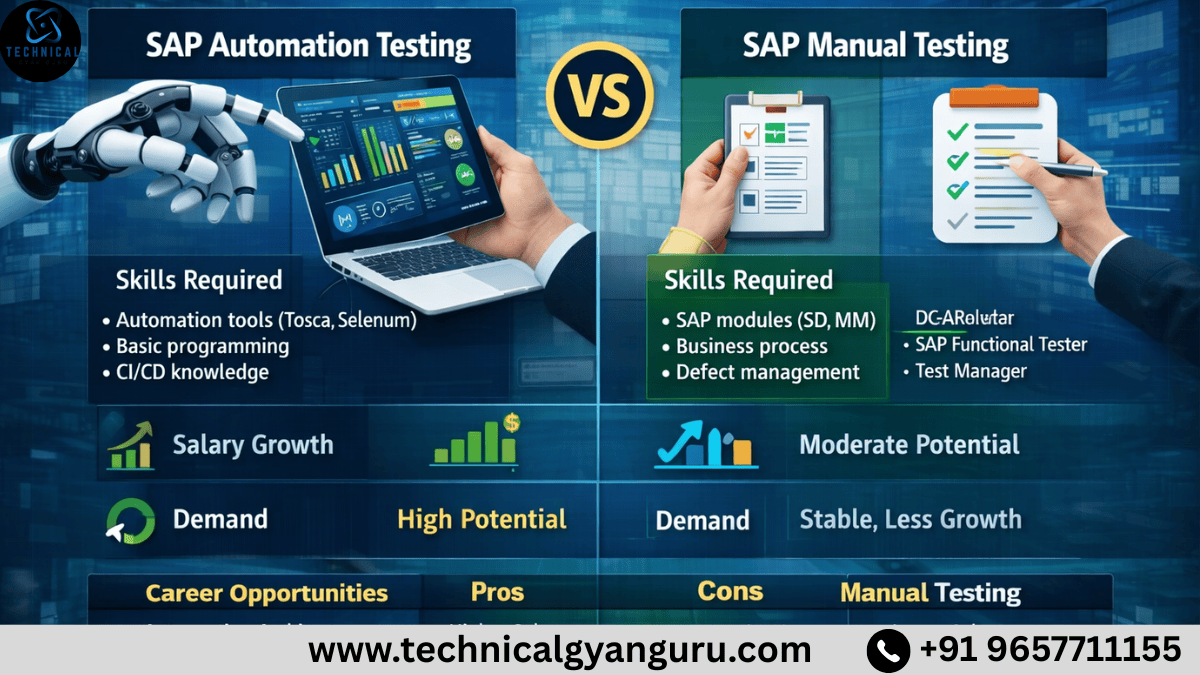
Interview Question 19 What Is the Difference Between Manual Testing and Automation Testing in SAP
Manual testing requires human execution of test steps.
Automation testing executes scenarios automatically using tools and frameworks.
Manual testing is still important for exploratory and usability testing, while automation is essential for large scale regression.
Interview Question 20 How Do You Select Which Scenarios to Automate
High risk and frequently executed business processes should be automated first.
Scenarios that are stable and repetitive are better candidates for automation.
Very dynamic or rarely executed scenarios are usually kept manual.
Interview Question 21 What Is API Testing in SAP Automation
API testing validates system to system communication without using user interfaces.
In SAP projects, APIs are used for integrations with cloud systems and external platforms.
Automated API tests help detect integration failures early.
Interview Question 22 How Do You Handle Automation Script Failures
Failures must be analyzed to identify whether the issue is data related, application related or automation related.
Automation engineers fix scripts only when the failure is caused by automation logic.
Business defects are reported to development teams.
Interview Question 23 What Is the Role of Monitoring in SAP Automation
Monitoring detects failures in workflows, interfaces, background jobs and automation executions.
Automated alerts inform support teams immediately.
This prevents business disruption and reduces manual checking.
Interview Question 24 What Is the Difference Between Low Code Automation and Script Based Automation
Low code automation allows users to design automation visually with minimal scripting.
Script based automation provides more flexibility and control for complex scenarios.
In real projects, both approaches are often combined.
Interview Question 25 What Are the Common Challenges in SAP Automation
Unstable test data
Frequent application changes
Lack of business involvement
Poor exception handling
High maintenance effort due to weak framework design
Interview Question 26 How Does SAP Automation Improve Business Value
Automation reduces processing time, minimizes errors, improves compliance and enables faster releases.
Organizations measure automation success through reduced incidents and faster deployment cycles.
Interview Question 27 What Is the Role of a Fresher During Automation Execution Cycles
Freshers monitor executions, validate results, prepare reports, assist in failure analysis and support data preparation.
They also update automation components under guidance of senior team members.
Interview Question 28 How Important Is Documentation in SAP Automation
Documentation explains automation flows, data dependencies and exception handling.
It helps new team members understand automation and supports audit and compliance reviews.
Interview Question 29 What Is the Difference Between Process Automation and Test Automation
Process automation executes business activities automatically for operational use.
Test automation validates system behavior for quality assurance.
Both use similar concepts but serve different purposes.
Interview Question 30 How Can a Fresher Prepare for SAP Automation Interviews
Freshers should focus on understanding business processes, automation types, test concepts, basic tool knowledge and real project scenarios.
Mock interviews and hands on practice with simple automation scenarios significantly improve confidence.
Practical Example for Interview Explanation
Consider a sales order automation scenario.
Process automation creates the order automatically based on incoming requests.
Workflow automation routes approvals if required.
Test automation validates that the order triggers delivery and billing correctly.
Monitoring automation detects failures and notifies the support team.
This single scenario clearly demonstrates how different automation layers work together.
Common Mistakes Freshers Make in SAP Automation Interviews
Only explaining tool names without understanding business purpose
Confusing RPA with full automation strategy
Ignoring data and exception handling topics
Not understanding difference between testing automation and process automation
Actionable Tips to Answer SAP Automation Interview Questions Confidently
Always connect your answers to real business processes.
Explain why automation is needed, not only how it is done.
Use simple real world examples such as purchase orders, invoices or sales orders.
Show awareness of limitations and risks of automation.
Explain how automation and manual work complement each other.
Career Opportunities for Freshers in SAP Automation
Automation tester
Automation engineer
Quality engineer
Workflow automation consultant
Integration automation support analyst
These roles offer strong growth potential and global demand.
How SAP Automation Skills Help Long Term Career Growth
Automation professionals move into roles such as test automation leads, quality architects, automation consultants and digital transformation specialists.
They work closely with business leaders and technical architects to design scalable automation strategies.
you may be interested in this blog here:-
Landing Your Dream Job: The Ultimate Guide to SAP MM Consultant resume 3 years experience