
 Varad
Varad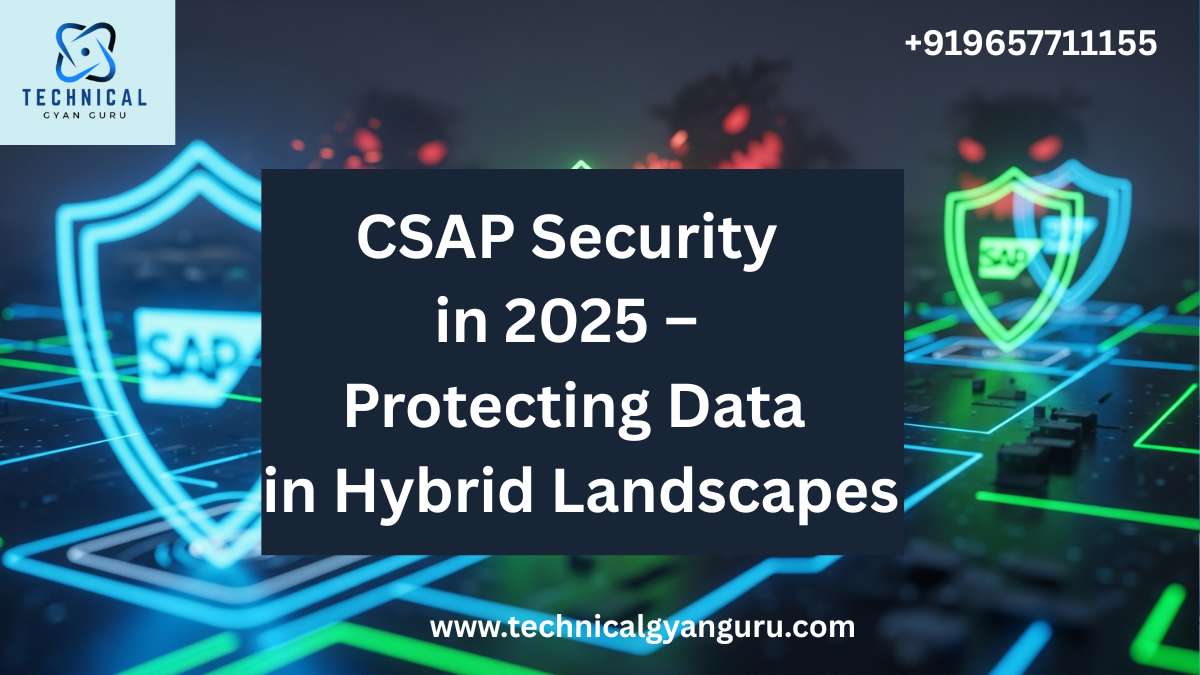
In a world where data is the new gold, protecting it has never been more critical. As companies race toward digital transformation, the line between on-premise and cloud environments continues to blur, creating what we now call hybrid landscapes. And at the center of securing this new terrain? CSAP Security—an evolving framework that’s becoming essential for organizations looking to thrive safely in 2025 and beyond.
Whether you’re a general reader, a curious employee, or someone diving into cybersecurity for the first time, this blog will guide you through the essentials of CSAP Security, why it matters, and how you can take the first step toward mastering it.
🔐 What is CSAP Security?
Let’s start with the basics.
CSAP Security refers to the cybersecurity practices, tools, and strategies used to protect SAP systems running in Cloud, SAP, and Hybrid environments. These systems handle everything from payroll to procurement, so keeping them secure is vital for business continuity and regulatory compliance.
Hybrid landscapes combine:
- On-premise systems (legacy or custom SAP instances),
- Public and private cloud solutions, and
- Third-party integrations.
In such a distributed setup, security threats don’t just come from outside hackers. Internal misconfigurations, poor user practices, and unsecured APIs are equally dangerous. CSAP Security helps detect, prevent, and respond to these threats across the entire environment.
📊 Why 2025 is a Turning Point
By 2025, digital transformation is no longer optional—it’s mandatory. Organizations are rapidly adopting SAP S/4HANA, integrating AI, and shifting operations to cloud platforms like AWS, Azure, and Google Cloud. This evolution brings massive benefits, but also exposes new vulnerabilities.
Here are the top reasons 2025 is the year to prioritize CSAP Security:
- 🔁 Increased adoption of hybrid and multi-cloud SAP deployments
- 🔍 Rising cybersecurity attacks, especially ransomware targeting ERP systems
- 🔐 Stricter data protection regulations (e.g., GDPR, CCPA, SAP Data Custodian policies)
- ⚙️ More complex user access and role management across hybrid systems
- 🤖 Greater reliance on AI/ML for business decisions, requiring secure, trusted data
Bottom line: Without strong CSAP Security, your business risks financial loss, reputational damage, and non-compliance penalties.
🧠 Real-World Scenarios: The Risks and Rewards
Let’s break this down with a relatable example:
Imagine a mid-sized manufacturing company running SAP ERP on-premise, but hosting its customer service tools in the cloud. An employee clicks on a phishing email, unknowingly compromising their login credentials. The attacker then moves laterally between systems, accessing financial data from the on-premise SAP instance via insecure APIs.
That’s a real-world breach scenario—and one that CSAP Security strategies are designed to prevent.
Now imagine that same company had implemented:
- Multi-factor authentication (MFA) on all SAP logins,
- Role-based access control with least privilege principles,
- Real-time threat detection across hybrid systems, and
- Data encryption at rest and in transit.
That breach could have been stopped in its tracks.
🛠 Key Components of CSAP Security in 2025
To succeed in protecting data in hybrid environments, organizations need a layered security approach. Here are the most important elements:
1. Identity and Access Management (IAM)
- Ensure users only access what they need
- Implement MFA and SSO across systems
2. Secure Configuration Management
- Regularly audit your SAP systems for vulnerabilities
- Automate security patching and compliance checks
3. Threat Detection and Response
- Use tools like SAP Enterprise Threat Detection
- Monitor logs and behavior for anomalies
4. Data Protection and Privacy
- Encrypt sensitive data both at rest and in motion
- Map out and classify data based on risk
5. Compliance and Governance
- Align with standards like ISO 27001, GDPR, NIST, and SAP-specific compliance
- Track user activity for audit purposes
💡 Beginner-Friendly Tips to Get Started
You don’t need to be a cybersecurity pro to contribute to your organization’s CSAP Security. Here’s how to begin:
- Get Familiar with Hybrid SAP Environments
Understand what systems your company uses on-premise vs. in the cloud. - Ask Questions About Security Practices
Don’t be afraid to speak up—ask your IT/security team how data is protected. - Practice Good Cyber Hygiene
Use strong, unique passwords and enable 2FA wherever possible. - Stay Updated on Compliance Requirements
Knowing the basics of GDPR or industry-specific rules helps you be more mindful in your role. - Take Introductory Cybersecurity Courses
Even a basic course on cloud security can make you more valuable to your team.
🌍 Industry Trends You Should Know
- SAP Security-as-a-Service (SECaaS) is gaining traction, offering scalable protection with expert support.
- AI-powered threat detection tools are helping companies identify unusual behavior patterns faster.
- Zero Trust Architecture (ZTA) is being implemented to eliminate implicit trust across systems.
- Quantum-ready encryption is starting to appear in forward-thinking security solutions.
The future of SAP security is smart, scalable, and continuous—2025 is just the beginning.
Conclusion
Building Cloud-Native ABAP Applications: A Guide to Modern SAP Development
How to Create RAP business events in SAP BTP ABAP Environment ?