
 Varad
Varad
The world of enterprise technology is shifting faster than ever, and SAP automation is at the center of this transformation. Companies that once relied on manual, rule-based SAP processes are now moving toward predictive, intelligent, and autonomous operations. As we look toward 2026 and beyond, the future of SAP automation promises smarter systems, faster decision-making, and more resilient digital enterprises.
Whether you’re a beginner learning SAP or a company employee working in operations, finance, or supply chain, understanding these upcoming trends will help you prepare for the next generation of business automation.
Why SAP Automation is Evolving So Rapidly
Global disruptions, rising customer expectations, and the need for real-time insights have pushed organizations to reinvent traditional SAP processes. Automation is no longer just about speed—it’s about intelligence, prediction, and self-optimization.
Several forces are driving this evolution:
- AI and machine learning becoming mainstream in enterprise tools
- Growth in cloud-native SAP technologies
- Demand for end-to-end automation across business workflows
- Increased need for supply chain resilience
- Rise of composable and autonomous digital systems
As these trends converge, SAP automation is moving into its most advanced era yet.
Key Trends Shaping the Future of SAP Automation (2026 and Beyond)
Let’s explore the most important trends that will define SAP automation’s future.
1. AI-Native SAP Systems Become Standard
By 2026, SAP applications will no longer simply integrate with AI—they will be AI-native, meaning:
- AI capabilities will come pre-integrated
- Systems will learn from historical SAP data
- Predictive insights will appear automatically in SAP Fiori apps
For beginners, this means SAP will start suggesting actions instead of waiting for input—a true evolution from “human-driven SAP” to AI-assisted SAP.
2. Autonomous SAP Processes (Self-Optimizing Operations)
Autonomous enterprise capabilities will allow SAP systems to:
- Detect issues
- Suggest actions
- Execute workflows
- Monitor outcomes
- Continuously refine rules and models
For example:
If AI predicts a shortage in the supply chain, autonomous SAP automation may automatically raise purchase orders, reroute shipments, or increase safety stock.
This turns reactive operations into self-steering business processes.
3. Hyperautomation Becomes the Default Strategy
SAP hyperautomation combines:
- RPA
- AI/ML
- Process mining
- Workflow automation
- APIs
- Intelligent document processing
In 2026, companies will use hyperautomation to automate end-to-end scenarios like:
- Procure-to-pay (P2P)
- Order-to-cash (O2C)
- Record-to-report (R2R)
- Hire-to-retire
This means beginners will see more tools integrated into SAP environments, making automation more fluid and powerful.
4. SAP Build Will Become the No-Code Hub for Enterprise Automation
SAP Build (including SAP Build Apps, SAP Build Process Automation, and Build Work Zone) will become the primary platform for creating:
- No-code workflows
- SAP automations
- Custom Fiori apps
- Low-code integrations
SAP Build + AI agents = fast automation without technical complexity.
Non-technical employees will be able to design and deploy automation that previously required ABAP or heavy IT involvement.
5. Predictive Analytics and Decision Intelligence Embedded Across SAP
By 2026:
- SAP S/4HANA
- SAP IBP
- SAP Ariba
- SAP SuccessFactors
will embed predictive engines into most core functions.
Examples:
- Predictive inventory
- Predictive demand
- Predictive workforce planning
- Predictive procurement
Companies will move from reporting what happened to knowing what will happen.
6. Composable SAP Architecture Using Clean Core Principles
SAP automation will shift toward:
- modular apps
- microservices
- API-first automation
- clean core extensions
This makes automations easier to maintain, upgrade, and scale across cloud environments.
7. AI Agents for SAP Become Enterprise Co-Workers
AI agents will soon:
- Log into SAP
- Read data
- Make decisions
- Trigger workflows
- Provide insights in natural language
For example, an AI agent could answer:
“Why did our material shortages increase last month?”
And then show predicted trends, causes, and recommended actions.
This brings SAP automation closer to a self-thinking system.
8. Human + AI Collaboration Will Redefine SAP Roles
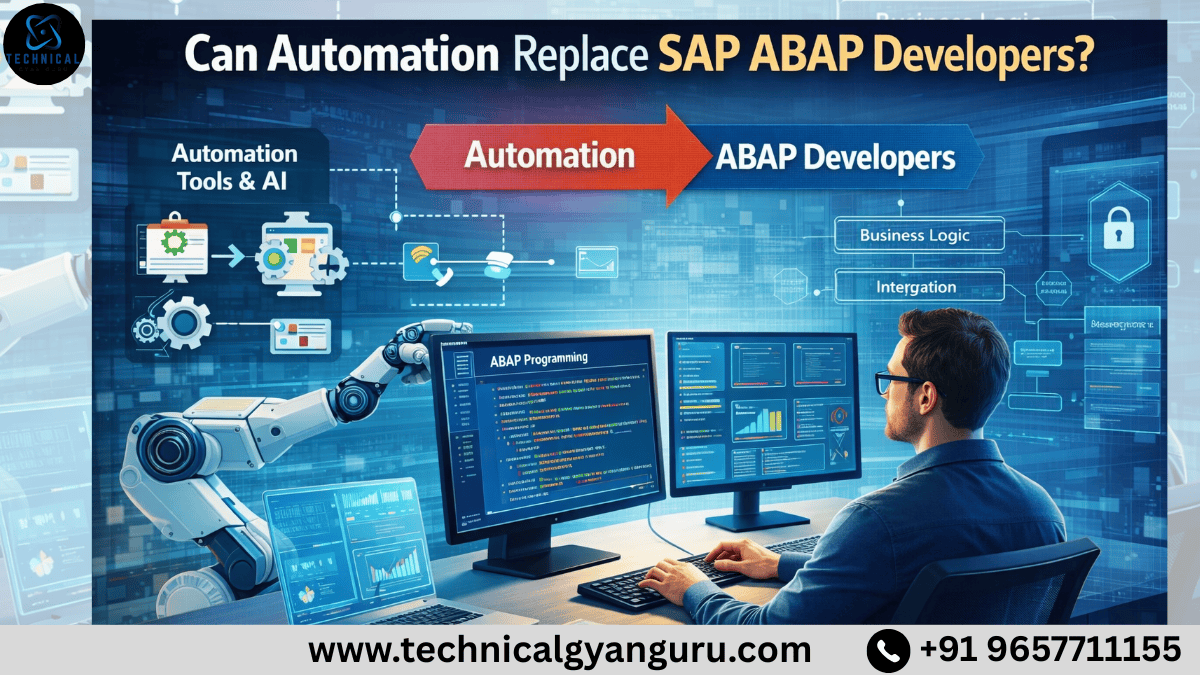
Roles like SAP functional consultant, ABAP developer, and automation analyst will evolve into:
- AI automation engineer
- SAP hyperautomation designer
- Business technologist
- SAP data and intelligence specialist
Beginners entering SAP in 2026 will work side-by-side with AI tools rather than purely technical systems.
Real-World Examples of SAP Automation in 2026
Smart Procurement
AI predicts supplier delays → SAP triggers alternate supplier selection → RPA confirms purchase order.
Intelligent Finance
Machine learning predicts overdue invoices → SAP automates reminders and updates credit limits.
Predictive Production Planning
Sensors detect machine vibration → AI predicts failure → SAP schedules maintenance automatically.
How Companies Can Prepare for the Future
Whether your company is small, medium, or enterprise-level, preparation is key.
1. Move to SAP S/4HANA Cloud
Most future automation capabilities will be cloud-native.
2. Adopt Clean Core
Avoid heavy customizations that block innovation.
3. Train Employees in AI + Automation
Your workforce needs future-ready skills.
4. Begin Using SAP Build Tools
Start automating simple workflows today.
5. Integrate RPA and AI Gradually
Begin with small use cases such as document processing or data validation.
Conclusion: The Future of SAP Automation is Intelligent, Predictive, and Autonomous
The future of SAP automation is not just about reducing manual work—it’s about creating systems that understand, decide, and act. As we move into 2026 and beyond, SAP environments will become more:
- Intelligent
- Predictive
- Autonomous
- Connected
- Resilient
For beginners and professionals alike, now is the best time to start learning AI, automation tools, and next-generation SAP technologies. The companies that embrace automation early will lead the digital race.
Ready to explore more?
Check out SAP automation guides, AI learning resources, and step-by-step tutorials to start building future-ready skills today.
Building Cloud-Native ABAP Applications: A Guide to Modern SAP Development
How to Create RAP business events in SAP BTP ABAP Environment ?