
 Varad
Varad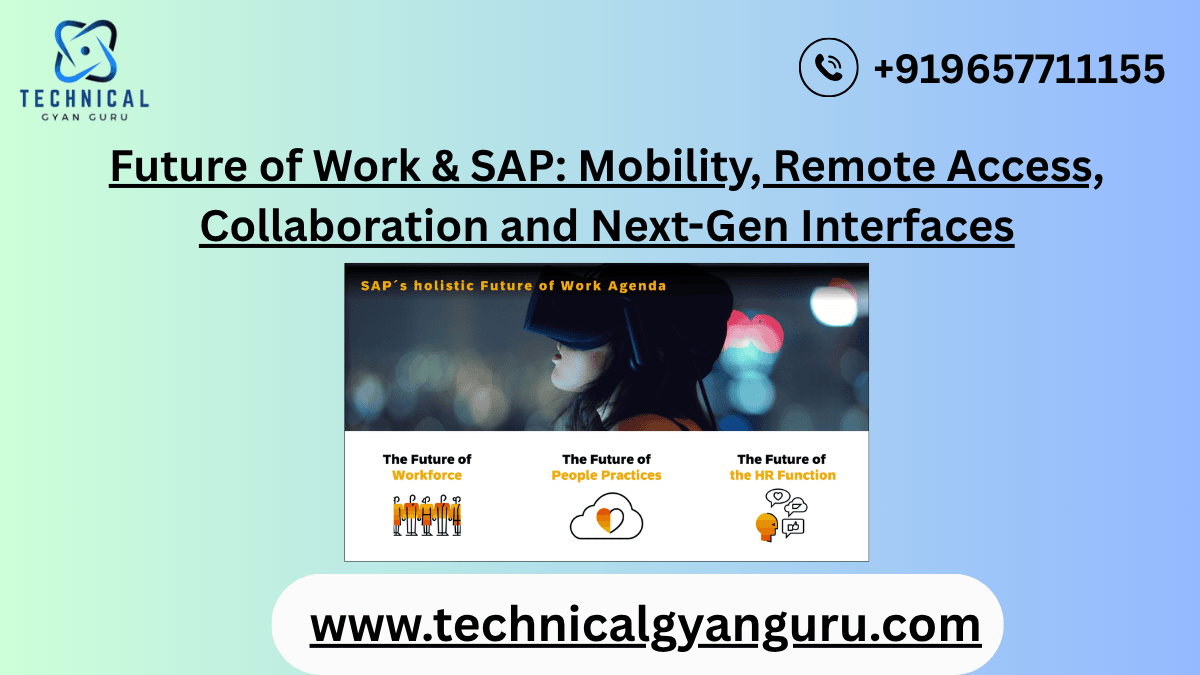
Work is no longer confined to offices, cubicles, or even time zones. The boundaries that once defined where, when, and how work happens have dissolved, giving rise to a new digital workforce empowered by intelligent technology. At the center of this transformation stands SAP—enabling businesses to embrace flexibility, automation, and connected collaboration at an unprecedented scale. The future of work and SAP is not a distant concept; it’s a reality unfolding today, redefining how organizations operate and how employees engage with technology.
The global shift to hybrid and remote work environments has pushed enterprises to rethink their digital ecosystems. Employees expect access to data and workflows anytime, anywhere, on any device. Meanwhile, businesses need to ensure that this mobility doesn’t compromise security, compliance, or performance. SAP’s evolving suite of cloud and mobility solutions bridges this gap—bringing together advanced analytics, real-time collaboration, and intelligent automation in one seamless ecosystem.
From Desktops to Dynamic Workspaces
A decade ago, SAP systems were primarily accessed within office firewalls—on desktops tethered to corporate networks. Today, that world is gone. The modern SAP user could be a field engineer accessing data through a tablet, a financial analyst reviewing reports on a mobile dashboard, or a manager approving workflows through voice commands on a wearable device. This evolution from static systems to mobile-first SAP experiences has revolutionized enterprise efficiency.
SAP Fiori, for example, is leading this shift with its intuitive, responsive design that prioritizes user experience. Whether an employee logs in from a smartphone, laptop, or tablet, Fiori ensures a consistent and personalized interface. Combined with SAP Mobile Start, employees gain secure access to applications and business data from anywhere—without friction. For companies that have adopted hybrid models, this is more than convenience; it’s a competitive advantage. Productivity is no longer tied to location but to capability.
The rise of mobile and cloud-native SAP solutions means employees can collaborate seamlessly across geographies. For instance, sales teams can update client interactions in real time while traveling, supply chain managers can monitor inventory status remotely, and HR departments can onboard new employees virtually. These experiences redefine work not as a place you go but as an activity you perform—supported by technology that moves with you.
Remote Access that Drives Agility
The future of work demands agility, and SAP has evolved to make that possible. Remote access is no longer just about logging into a system from outside the office; it’s about creating an intelligent, secure, and integrated digital workspace. With SAP Business Technology Platform (BTP) and SAP S/4HANA Cloud, organizations can empower employees with real-time data, analytics, and workflow automation—accessible anywhere in the world.
Take a manufacturing enterprise as an example. Plant supervisors using mobile-enabled SAP dashboards can monitor equipment status, receive alerts, and trigger maintenance requests—all from their tablets. Finance leaders can review performance analytics remotely through SAP Analytics Cloud, making strategic decisions without being physically present in boardrooms. The synergy between SAP’s cloud infrastructure and its integration capabilities with tools like Microsoft Teams and Google Workspace creates a truly connected environment.
Security, of course, is paramount. SAP’s approach to secure mobility combines single sign-on, encrypted data transmission, and role-based access controls. This ensures that as flexibility expands, governance remains intact. The result is a digital workplace that balances freedom and control—enabling employees to perform at their best while ensuring compliance and security for the enterprise.
Collaboration Without Boundaries
In the modern workplace, collaboration is the new currency of productivity. The more seamlessly people can connect, the faster innovation happens. SAP understands this shift and has been reimagining its ecosystem to foster collaboration not only within teams but across entire value chains.
SAP’s partnership with Microsoft 365 and Teams has been a game changer. Employees can now view, edit, and act on SAP data directly within Teams, eliminating the need to switch between systems. Imagine approving a purchase order, updating a project budget, or analyzing supply chain performance—all within your chat window. This kind of contextual collaboration streamlines decision-making and keeps teams focused on outcomes rather than processes.
Moreover, SAP Build Work Zone provides a unified digital workspace where employees can access business applications, news, and collaboration tools in one interface. It personalizes the experience based on roles and responsibilities, creating a sense of belonging and efficiency even in remote or distributed setups.
Beyond internal teams, SAP’s collaborative power extends to external stakeholders through SAP Business Network—connecting suppliers, customers, and partners in real-time. This interconnected approach transforms collaboration from an internal function to a holistic ecosystem that drives business agility.
Next-Gen Interfaces and Intelligent Experiences
As we step into the next phase of enterprise technology, user interfaces are evolving from screens and clicks to conversations and intelligence. The future of work and SAP is increasingly defined by natural, intuitive, and AI-driven interactions. Employees will not just use SAP systems—they will talk to them, collaborate with them, and learn from them.
SAP’s integration of generative AI and intelligent agents through SAP Joule, its digital assistant, represents a leap toward this future. Joule can summarize data, suggest actions, and even execute commands based on natural language input. Imagine a project manager asking, “Show me the top five suppliers with delayed shipments,” and receiving instant insights and suggested follow-ups—all within the SAP interface.
In parallel, voice-enabled SAP solutions are gaining traction across industries. Field workers can use smart glasses or voice assistants to log inspection reports, while executives can request performance summaries hands-free during meetings. This shift toward multimodal interaction—combining voice, touch, and predictive intelligence—makes SAP systems more human-centric and accessible.
Augmented and virtual reality (AR/VR) interfaces are also entering enterprise workflows. In manufacturing or energy sectors, SAP is being integrated with AR solutions that allow technicians to visualize data overlays during maintenance tasks. These innovations not only enhance productivity but also reduce training time and human error.
Empowering the Hybrid Workforce
The hybrid model is here to stay, and SAP’s technologies are shaping how organizations adapt to this blended way of working. The company’s focus on experience management through SAP SuccessFactors ensures that employees remain engaged, connected, and supported, regardless of where they work.
Through real-time feedback loops and sentiment analysis, HR teams can understand employee well-being and productivity trends. Learning modules, accessible via mobile or desktop, ensure continuous skill development. This alignment between digital tools and human needs fosters a culture of empowerment and innovation.
In parallel, SAP’s predictive analytics and machine learning capabilities are enabling smarter workforce planning. Companies can anticipate talent needs, identify skill gaps, and design future-ready strategies—all from data-driven insights. The future of work is not just about mobility or technology—it’s about empowering people to perform with purpose, supported by intelligent systems that adapt to their needs.
The Road Ahead: Building an Intelligent, Inclusive Future
As businesses navigate the ever-changing landscape of digital work, one truth stands out: technology is only as powerful as the people who use it. The future of work and SAP is a story of collaboration between human potential and intelligent technology. It’s about designing work environments that are mobile, inclusive, and adaptive to constant change.
In the coming years, expect SAP to deepen its focus on automation, sustainability, and ethical AI—ensuring that the digital workplace not only becomes more efficient but also more responsible. The next generation of SAP solutions will blur the line between human and digital workflows, enabling companies to achieve operational excellence while enhancing employee experience.
For leaders and professionals alike, now is the moment to embrace this transformation. Invest in mobility strategies, strengthen your collaboration ecosystems, and explore how next-gen SAP interfaces can elevate your organization’s performance. The businesses that succeed will be those that see technology not as a tool but as a partner in progress—one that amplifies human creativity and resilience.
Ready to take the next step? Explore our curated resources, expert-led SAP learning programs, and deep-dive guides on future-ready workplace solutions. The future of work is already here—SAP is how you build it.
you may be interested in this blog here:-
Top SAP Modules in Demand 2024 Insights & Trends
Advanced OOP Concepts in SAP ABAP A Comprehensive Guide
GRC Security: Ensuring Comprehensive Governance, Risk, and Compliance