
 Varad
Varad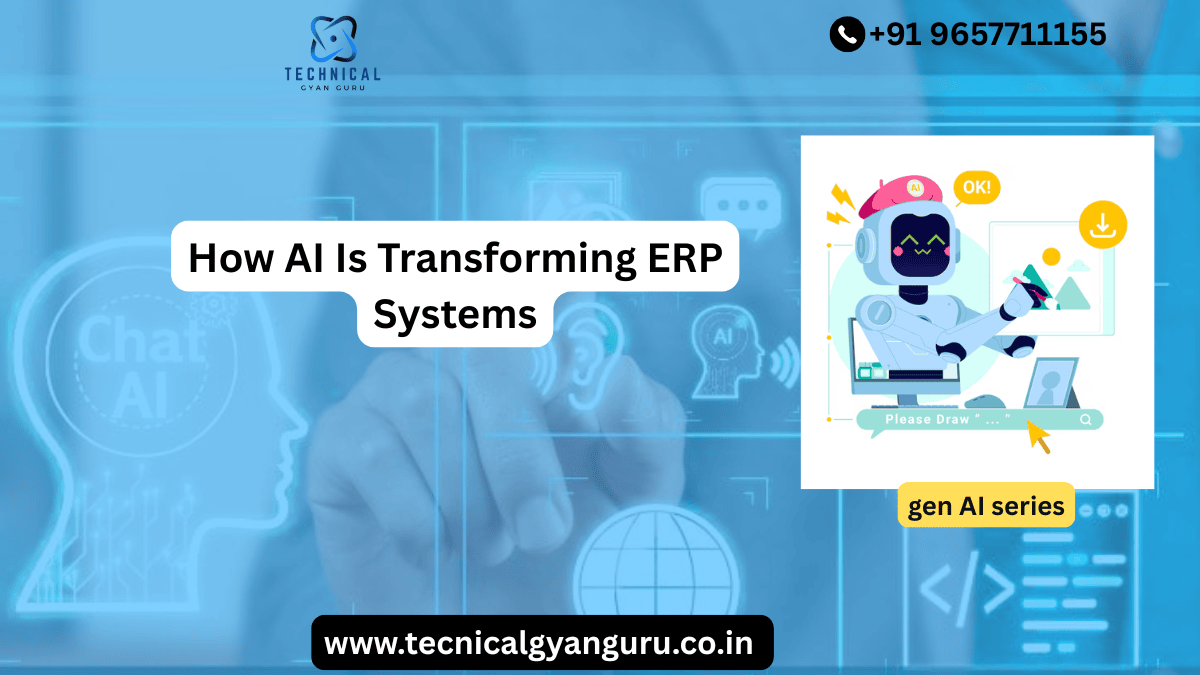
Enterprise resource planning systems have quietly run the backbone of business operations for decades, handling everything from inventory tracking to payroll processing without much fanfare. That era of quiet, static ERP is ending fast. Artificial intelligence is reshaping how these systems function, turning them from passive record keepers into active decision making partners. If you run a business or manage operations, understanding this shift is no longer optional. It is becoming the difference between companies that scale efficiently and those that get buried under their own data.
This article breaks down exactly how AI is transforming ERP systems, why it matters, and what practical steps you can take to prepare your organization for what is coming next.
Why Traditional ERP Systems Are Reaching Their Limits
Classic ERP platforms were built around structured workflows. You input data, the system processes it according to fixed rules, and someone on your team interprets the output. This worked well when business environments were predictable and data volumes were manageable. Neither of those conditions holds true anymore.
Supply chains span multiple continents. Customer expectations shift in real time based on social trends. Market conditions can change within hours because of a single geopolitical event. Traditional ERP systems simply were not designed to react at that speed. They store information beautifully but they do not think. That gap is exactly where AI steps in.
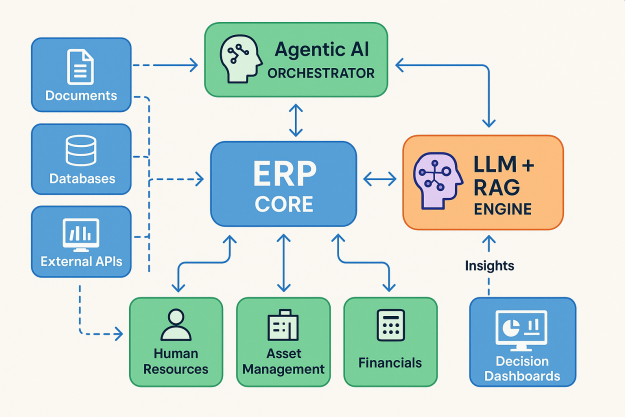
How AI Is Actually Changing ERP Systems
Predictive Analytics Replacing Guesswork
One of the most immediate changes is the shift from reactive reporting to predictive forecasting. Older ERP systems could tell you what happened last quarter. AI powered ERP systems can tell you what is likely to happen next quarter and why.
For example, a mid sized manufacturing company using an AI enhanced ERP platform can now predict raw material shortages weeks before they occur by analyzing supplier performance patterns, weather disruptions, and historical demand spikes together. Instead of reacting to a stockout, procurement teams get an alert and can adjust orders proactively.
This is not theoretical. Companies like SAP and Oracle have already built machine learning modules directly into their ERP suites, allowing demand forecasting accuracy to improve significantly compared to traditional statistical models.
Intelligent Process Automation
Automation itself is not new to ERP. What is new is the intelligence behind it. Traditional automation followed rigid if this then that logic. AI driven automation can now handle exceptions, learn from historical decisions, and adjust processes without constant human reprogramming.
Take invoice processing as a practical example. A finance team previously had to manually review invoices that did not match purchase orders exactly. Now, AI models trained on historical approval patterns can flag genuine anomalies while auto approving minor discrepancies that historically got approved anyway. This alone can cut invoice processing time by more than half in many mid market companies.
Natural Language Interfaces Inside ERP
Another major shift is how people actually interact with ERP systems. Instead of navigating complex menus and generating static reports, users can now type or speak natural language queries directly into the system.
A warehouse manager can ask something like show me which products are likely to run out of stock in the next two weeks and get an instant, context aware answer instead of building a custom report through multiple modules. This dramatically reduces the learning curve for new employees and speeds up daily decision making across departments.
Smarter Inventory and Supply Chain Management
Inventory management has traditionally been one of the most error prone areas of ERP. AI is changing this through real time demand sensing, which combines point of sale data, seasonal trends, and even social media sentiment to adjust inventory recommendations dynamically.
Retail businesses using AI integrated ERP systems have reported meaningfully reduced excess inventory while simultaneously reducing stockouts, because the system is constantly recalibrating based on live data rather than static historical averages updated once a month.
Enhanced Financial Planning and Risk Detection
Finance departments are seeing some of the most measurable benefits from AI integration. Fraud detection algorithms embedded in ERP systems can now flag unusual transaction patterns in real time, something that used to require manual audits or third party software.
Beyond fraud detection, AI models can run continuous financial scenario planning. Instead of building a single annual budget forecast, finance teams can generate multiple dynamic scenarios based on shifting variables like currency fluctuations, interest rate changes, or supply cost increases, and update those scenarios automatically as new data comes in.
Personalized User Experiences Within ERP Dashboards
Every employee interacts with ERP systems differently. A sales manager needs different data visibility than a warehouse supervisor or a finance controller. AI is enabling ERP systems to build personalized dashboards automatically based on role, past behavior, and even time sensitive priorities.
This might sound like a small convenience, but it has a real impact on adoption rates. Employees are far more likely to actually use a system that surfaces relevant information without requiring them to dig for it.
Real-World Examples of AI-Powered ERP in Action
A logistics company integrated AI driven route optimization directly into its ERP platform, allowing dispatch decisions to factor in live traffic data, fuel costs, and driver availability simultaneously. Delivery times improved and fuel costs dropped within the first two quarters of implementation.
A healthcare provider network used AI enhanced ERP modules to predict patient volume fluctuations across facilities, allowing better staff scheduling and reduced overtime costs while maintaining quality of care standards.
A retail chain used machine learning embedded in its ERP inventory module to reduce markdown losses by identifying overstock risks nearly a month earlier than their previous system allowed.
These are not isolated success stories. They represent a broader pattern of measurable operational improvement across industries adopting AI within their ERP infrastructure.
Challenges Businesses Face When Adopting AI in ERP
Data Quality Issues
AI models are only as good as the data feeding them. Many businesses discover during implementation that their historical data is inconsistent, duplicated, or poorly structured. Cleaning this data before AI integration is often the most time consuming part of the entire process, but skipping it leads to unreliable predictions.
Employee Resistance and Training Gaps
New technology often meets resistance, especially from employees who have used the same ERP workflows for years. Successful implementations invest heavily in training and clearly communicate how AI tools make daily tasks easier rather than replacing jobs outright.
Integration With Legacy Systems
Many companies still run older ERP versions that were never designed with AI integration in mind. Bridging these systems often requires middleware solutions or phased upgrades rather than a single overnight switch.
Practical Steps to Prepare Your Business for AI Powered ERP
Start by auditing your current data quality before anything else. No AI feature will perform well on messy, incomplete, or duplicated records.
Identify one or two high impact use cases rather than attempting a full system overhaul immediately. Predictive inventory management or automated invoice processing are strong starting points because they show measurable ROI quickly.
Involve department leaders early in the planning process. Finance, operations, and warehouse managers understand daily pain points better than IT teams alone and their input shapes more effective AI implementation.
Choose ERP vendors who already have proven AI modules rather than promising future roadmaps. SAP, Oracle NetSuite, Microsoft Dynamics, and Infor have all released tested AI capabilities that are currently in active use across multiple industries.
Plan for ongoing model training. AI systems improve over time as they process more data, but this requires periodic review and adjustment rather than a one time setup.
What the Future Looks Like for AI and ERP
The next phase of ERP evolution is moving toward fully autonomous decision making within defined boundaries. Instead of just recommending actions, future ERP systems will likely execute low risk decisions automatically, such as reordering standard inventory items or adjusting minor budget allocations, while flagging higher stakes decisions for human review.
Voice activated ERP interfaces are also expected to become mainstream within the next few years, allowing hands free operation across warehouse floors and mobile field teams. Combined with predictive analytics, this creates ERP systems that function less like static software and more like an intelligent operational partner working alongside your team.
Businesses that treat this shift as a strategic priority rather than a future consideration will have a measurable competitive advantage. Those that delay adoption risk falling behind competitors who are already using AI powered ERP systems to move faster, cut costs, and make better decisions with less manual effort.
Final Thoughts
AI is not replacing ERP systems. It is making them dramatically more useful. The businesses seeing the biggest benefits are the ones treating AI integration as an ongoing capability rather than a single software upgrade. Start small, focus on clean data, choose proven use cases, and build from there. The companies that master this transition now will be the ones setting the pace for their industries over the next decade.