
 Varad
Varad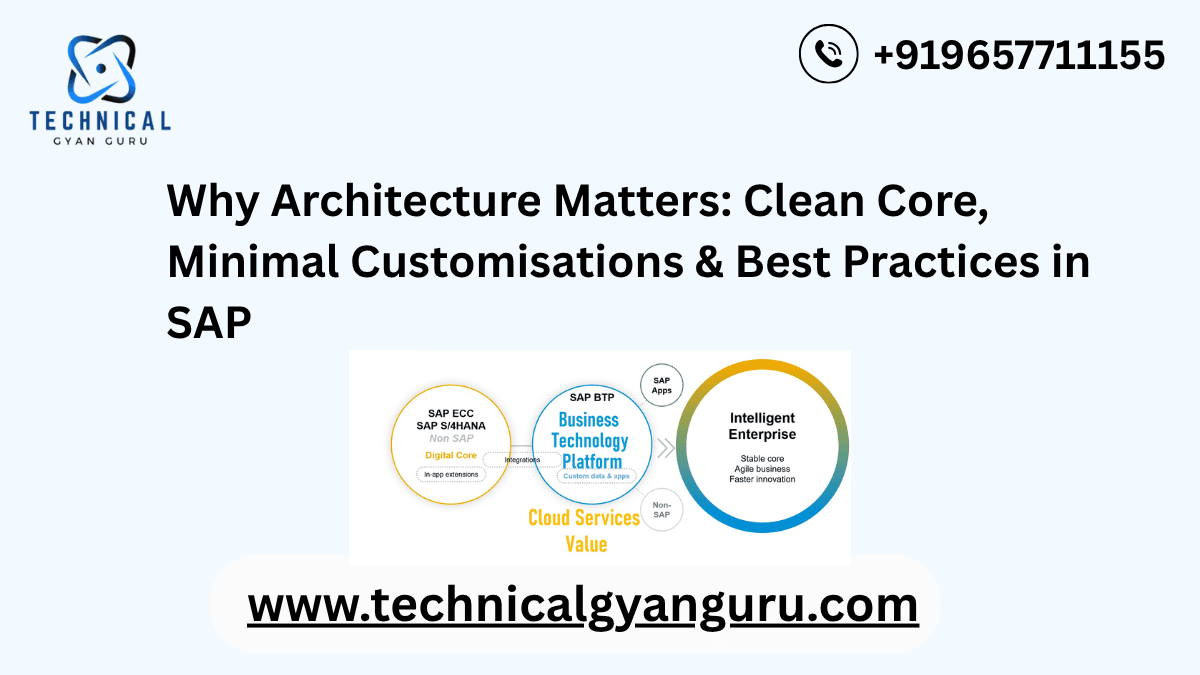
In today’s cloud-first era, businesses are under increasing pressure to innovate rapidly while maintaining system stability and compliance. As enterprises embrace SAP S/4HANA and other cloud technologies, one concept stands at the heart of successful implementations—SAP Clean Core Architecture. This approach is more than a technical best practice; it’s a philosophy that shapes how organizations build, run, and evolve their SAP environments efficiently. Maintaining a clean core ensures that your SAP system remains robust, adaptable, and ready for future innovations without being weighed down by unnecessary customisations or outdated extensions.
Every SAP implementation, whether on-premise or in the cloud, faces the same fundamental challenge—balancing the need for business-specific functionality with the necessity of system standardization. Over the years, many organizations have heavily customised their SAP systems to fit unique business processes. While this provided short-term flexibility, it also created long-term complexity. Custom code often leads to performance bottlenecks, higher maintenance costs, and upgrade challenges. The move to the cloud, however, has changed the game. SAP’s Clean Core strategy emphasizes simplicity, standardization, and extensibility—helping companies innovate without breaking the core system.
To understand why SAP Clean Core Architecture is essential, imagine your SAP environment as the foundation of a house. The cleaner and stronger the foundation, the easier it becomes to build, remodel, or expand the structure. In this analogy, a “clean core” means keeping your SAP system as close as possible to standard SAP functionality. This ensures that upgrades, security patches, and new feature integrations can be implemented quickly and efficiently without conflicts caused by heavy customisations.
The philosophy of Clean Core doesn’t mean eliminating all flexibility—it’s about using the right tools in the right way. Instead of modifying core code, organizations are encouraged to extend and innovate using SAP Business Technology Platform (BTP). This allows developers to build custom applications, workflows, and integrations outside the core system while maintaining clean, upgrade-safe operations. For example, if a company wants to create a unique sales approval process, it can design it on BTP using APIs rather than altering the underlying SAP S/4HANA logic. This decoupled approach protects the system integrity while allowing continuous innovation.
Another critical element of Clean Core is governance. Effective governance ensures that every customization, extension, or integration aligns with business objectives and follows best practices. Organizations are adopting frameworks such as SAP Activate and Fit-to-Standard workshops to analyze requirements and determine whether customization is truly necessary. The goal is to make “standard first” the guiding principle—implement standard SAP functionality whenever possible, and only extend when business value justifies it. This mindset shift has led to significant cost savings and operational efficiency for many global enterprises.
Take, for instance, a multinational manufacturer migrating to SAP S/4HANA Cloud. The company had thousands of custom programs in its legacy ECC system, many of which were redundant or unused. By embracing the Clean Core strategy, they evaluated each customization and retained only those critical for business differentiation. The rest were either replaced by standard S/4HANA features or reimagined as cloud extensions on BTP. The result? Faster upgrades, reduced maintenance costs, and a more agile system landscape that can evolve with business needs.
A clean core also has direct implications for system performance and security. Custom code can introduce vulnerabilities and inconsistencies that affect data integrity and compliance. With SAP’s continuous innovation model in the cloud, regular updates and patches are essential. When your system is cluttered with customizations, even minor updates can become complex projects. Maintaining a clean core minimizes these risks, ensuring smoother updates, better security compliance, and faster adoption of new SAP features.
Minimal customisations go hand-in-hand with Clean Core Architecture. They enable organizations to focus on what truly differentiates their business instead of reinventing standard processes. For example, core financial transactions, procurement workflows, and reporting functions are already optimized within SAP S/4HANA. Companies that keep these functions standard can leverage SAP’s continuous enhancements, automation tools, and artificial intelligence features more effectively. Meanwhile, unique business requirements can be addressed through side-by-side extensions that don’t compromise system integrity.
SAP’s recommendation to keep the core clean is not just theoretical—it’s backed by proven best practices. Leading companies across industries are implementing Clean Core governance models to define extension policies, monitor code quality, and manage integrations. Tools like SAP Readiness Check and Custom Code Migration Worklist help identify non-standard elements that may hinder system performance or upgrades. These tools empower organizations to continuously assess and improve their architecture, keeping it clean, modular, and future-ready.
The Clean Core approach also enhances collaboration between IT and business teams. With a simpler, standardized core, IT departments spend less time maintaining legacy code and more time driving innovation. Business users, on the other hand, gain faster access to new features and updates that help them stay competitive. This alignment is critical in a world where digital transformation depends on the seamless integration of technology and business strategy.
Looking ahead, SAP Clean Core Architecture will play an even greater role as companies move toward intelligent, composable enterprises. The rise of modular ERP, artificial intelligence, and low-code development platforms means that flexibility and standardization must coexist. A clean core provides the foundation for this balance, ensuring that every innovation builds upon a stable, efficient, and secure SAP environment.
The message for businesses is clear: maintaining a clean core is not just a technical decision—it’s a strategic one. It determines how quickly your organization can adapt to change, adopt new technologies, and scale globally without unnecessary disruption. By prioritizing standardization, embracing SAP BTP for extensions, and following clean core best practices, companies can unlock the full potential of SAP S/4HANA while staying lean, agile, and competitive.
In essence, Clean Core Architecture embodies the future of enterprise technology—simple, flexible, and intelligent. As organizations continue their journey toward digital transformation, those that embrace this philosophy will stand out as leaders capable of evolving faster, operating smarter, and innovating continuously.
Call to Action: Ready to build your Clean Core strategy for SAP? Explore our in-depth learning guides, expert webinars, and best practice frameworks designed to help you master Clean Core Architecture and accelerate your SAP transformation journey. Visit our website today to start shaping a future-ready SAP landscape that’s built to last.
you may be interested in this blog here:-
Can anybody know about mba in business analytics?