
 Varad
Varad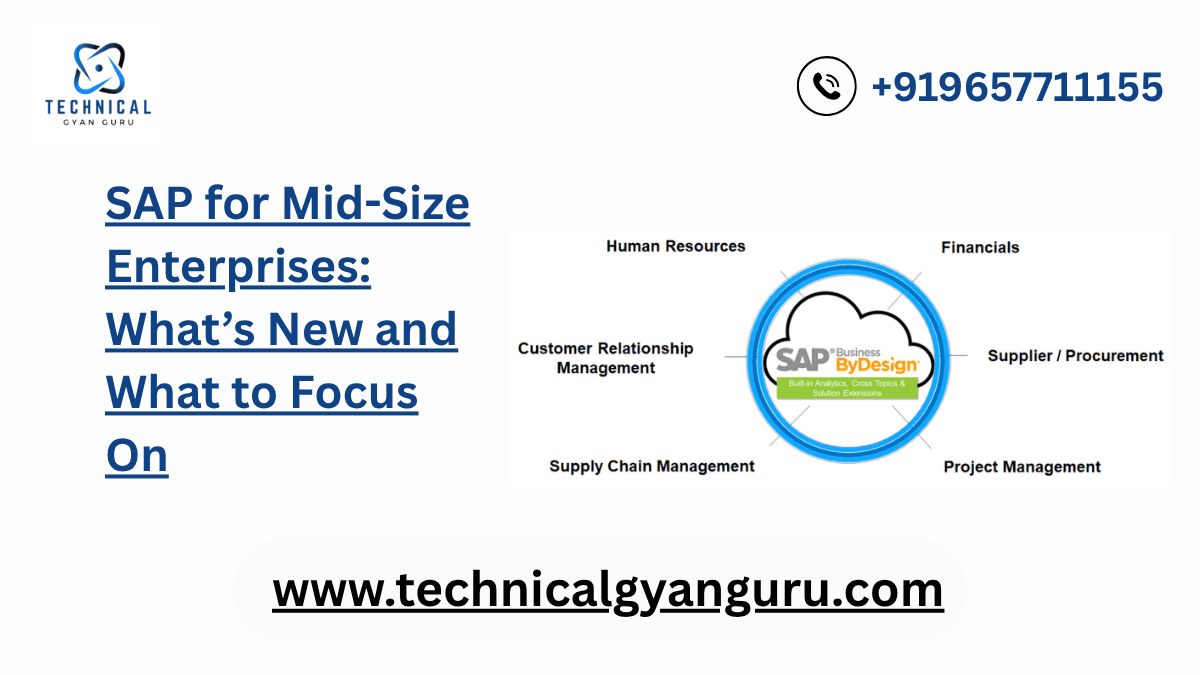
In today’s fast-moving digital economy, mid-size enterprises stand at a unique crossroads. They are big enough to face complex operational challenges yet agile enough to seize opportunities faster than large corporations. As they scale, however, many find themselves grappling with fragmented data, manual processes, and limited visibility across business functions. That’s where SAP for mid-size enterprises is reshaping the game—helping growing businesses achieve enterprise-grade efficiency without the weight of large-scale complexity.
Over the past few years, SAP has undergone a profound transformation, shifting from traditional ERP systems to modular, cloud-based, and AI-empowered platforms. For mid-size organizations, this evolution represents not just a software upgrade but a strategic advantage. It bridges the gap between ambition and capability—giving them tools that are smarter, faster, and built to scale with their vision.
The Evolving Role of SAP for Mid-Size Enterprises
SAP’s relationship with mid-size companies has evolved far beyond offering scaled-down enterprise software. The focus today is on delivering industry-specific, affordable, and flexible solutions that help businesses innovate faster. Platforms like SAP S/4HANA Cloud, public edition, and SAP Business ByDesign are tailor-made for growing organizations. These cloud ERP solutions provide real-time insights, automation, and integration across finance, supply chain, sales, and HR—all within a single ecosystem.
In 2025, SAP’s renewed commitment to mid-size enterprises is evident in its simplified implementation models, modular design, and AI-driven analytics. The goal is clear: empower businesses to modernize core operations without heavy infrastructure costs or long deployment timelines. By adopting SAP’s cloud-first approach, mid-size firms can unlock enterprise-grade performance while maintaining the flexibility to adapt as markets evolve.
Why the Cloud Is the Heart of SAP’s Mid-Market Strategy
One of the most important developments for mid-size enterprises is the transition to cloud-based ERP systems. Cloud technology levels the playing field by giving smaller organizations access to the same innovation power that large corporations enjoy—but at a fraction of the cost and complexity. With SAP S/4HANA Cloud and Business ByDesign, companies can deploy solutions quickly, scale easily, and ensure business continuity through built-in security and compliance features.
For instance, a mid-size manufacturing company that previously relied on disconnected systems can now integrate production, inventory, and finance seamlessly. Decision-makers gain real-time visibility into operations, allowing them to respond to market fluctuations instantly. This agility is what separates thriving mid-size businesses from those that lag behind.
SAP’s move toward cloud ERP also supports sustainability initiatives. By consolidating processes into a digital core, businesses reduce waste, streamline supply chains, and achieve better resource utilization—all critical for long-term resilience.
Harnessing Artificial Intelligence and Analytics
In 2025, AI and machine learning are no longer buzzwords—they’re essential to business competitiveness. SAP embeds AI-driven capabilities throughout its suite of solutions to automate tasks, predict trends, and personalize customer experiences. For mid-size enterprises, this means fewer manual processes and smarter decision-making at every level.
Imagine a retail company using SAP Customer Experience to analyze buying patterns and automatically adjust inventory across stores. Or a service provider leveraging SAP Analytics Cloud to predict cash flow trends and optimize staffing. These innovations turn data into strategy, enabling mid-size businesses to compete on intelligence rather than just scale.
Moreover, SAP’s Business Technology Platform (BTP) allows enterprises to integrate AI, IoT, and analytics seamlessly with their existing workflows. This composable architecture empowers mid-size firms to innovate continuously—adapting their ERP to meet new business models or regulatory changes without overhauling their entire system.
Simplified Implementation and Scalability
Historically, one of the biggest barriers mid-size enterprises faced with ERP systems was the cost and complexity of implementation. SAP has addressed this challenge head-on through preconfigured templates, industry best practices, and rapid deployment options. These accelerators reduce implementation time from months to weeks, ensuring businesses see value faster.
Additionally, SAP’s modular approach means companies can start small—say, with financial management—and expand gradually into supply chain, HR, or customer experience as their needs evolve. This pay-as-you-grow model aligns perfectly with mid-size organizations that need flexibility without financial strain.
Partners also play a crucial role in this ecosystem. SAP’s global partner network offers localized expertise, training, and support, helping businesses adapt solutions to their regional and industry-specific requirements. Whether it’s a manufacturing plant in Pune or a logistics firm in Berlin, mid-size enterprises can now deploy SAP with confidence and agility.
Industry-Specific Solutions for Real-World Impact
SAP understands that no two industries operate alike, and this understanding shapes its solutions for mid-size enterprises. For example, SAP Business One remains a popular choice among manufacturing and distribution firms seeking an affordable yet powerful ERP. Meanwhile, SAP S/4HANA Cloud, public edition, is gaining traction in professional services, wholesale, and life sciences sectors due to its built-in analytics and integration capabilities.
Consider the case of a mid-size healthcare provider adopting SAP S/4HANA Cloud to manage patient data, billing, and inventory in compliance with global health standards. By consolidating information across departments, the organization reduces errors, enhances patient care, and gains deeper insight into operational efficiency—all from a single dashboard.
These industry-tailored solutions are designed to deliver measurable results: lower operational costs, faster reporting cycles, improved compliance, and enhanced customer satisfaction.
The Human Element: Empowering Teams Through Innovation
Technology alone isn’t the answer—it’s how people use it that drives transformation. SAP recognizes this and has focused heavily on improving user experience (UX) and accessibility. Tools like SAP Fiori deliver intuitive, role-based interfaces that make navigation simple, even for non-technical employees. This human-centered design reduces training time and increases adoption rates across teams.
Moreover, SAP’s learning ecosystem, including SAP Learning Hub and certification programs, provides employees with opportunities to upskill and stay current with digital tools. For mid-size enterprises, investing in people is just as vital as investing in software. A digitally skilled workforce becomes a key competitive asset—capable of driving innovation from within.
Key Focus Areas for 2025 and Beyond
As the business landscape continues to evolve, mid-size enterprises should focus on a few strategic priorities when adopting or optimizing SAP solutions. First, embrace a cloud-first mindset to ensure scalability, security, and agility. Second, leverage data analytics and AI to enhance decision-making and predict business outcomes. Third, integrate sustainability and compliance goals into ERP strategies, aligning digital transformation with long-term growth and responsibility.
In addition, companies should aim to build digital resilience by continuously modernizing their IT landscape. With SAP’s modular architecture, businesses can easily incorporate new technologies—like blockchain for traceability or IoT for smart operations—without disrupting core processes.
Building the Future with SAP
SAP for mid-size enterprises isn’t just a technology choice—it’s a growth strategy. By adopting intelligent cloud solutions, companies can streamline operations, empower employees, and gain the agility to adapt in real time. Whether it’s entering new markets, optimizing supply chains, or improving customer experiences, SAP provides the digital foundation to make it happen.
The next wave of digital transformation is here, and mid-size businesses are at its heart. With SAP’s evolving ecosystem of cloud, AI, and analytics solutions, they can confidently scale from where they are today to where they want to be tomorrow.
If you’re ready to explore how SAP can help your organization transform, don’t stop here. Dive deeper into our advanced learning resources, expert guides, and online courses designed to help you master SAP implementation and strategy for mid-size enterprises. Your business’s next chapter of growth and innovation begins today.
Building Cloud-Native ABAP Applications: A Guide to Modern SAP Development
How to Create RAP business events in SAP BTP ABAP Environment ?