
 Varad
Varad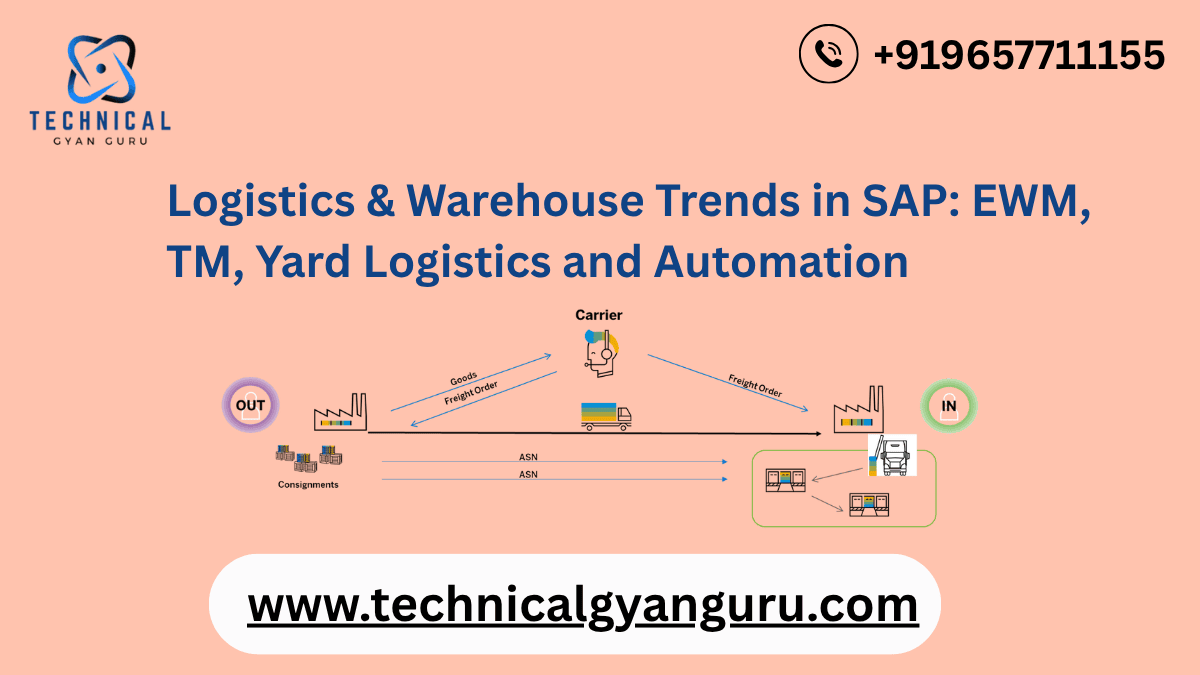
In today’s hyper-connected global economy, logistics and warehouse management have become the beating heart of business efficiency. The ability to deliver products faster, cheaper, and with greater transparency is now a critical differentiator for companies across industries. As digital supply chains evolve, SAP continues to lead innovation with a suite of intelligent logistics solutions designed to connect people, processes, and technology seamlessly. From SAP Extended Warehouse Management (EWM) to Transportation Management (TM) and Yard Logistics, the rise of SAP Logistics and Warehouse Automation is redefining how organizations operate, optimize, and scale their supply chain operations in 2025 and beyond.
For beginners exploring SAP’s logistics ecosystem, understanding these technologies is essential. Each component—EWM, TM, and Yard Logistics—addresses a specific part of the logistics chain, but together they create an integrated, data-driven environment where efficiency meets intelligence. The result is an end-to-end logistics solution that not only manages goods and movements but also leverages automation, AI, and IoT to drive real-time decision-making.
The story begins in the warehouse, where SAP Extended Warehouse Management (EWM) plays a central role. Traditional warehouses once relied on manual tracking and paper-based systems, often leading to delays and errors. EWM changes that by offering real-time visibility into inventory, automating key warehouse processes, and ensuring that every movement—from inbound deliveries to outbound shipments—is optimized. With advanced features such as slotting, wave management, and labor management, EWM allows companies to run complex, multi-level warehouses efficiently. More importantly, in 2025, the system is evolving with machine learning and robotics integration, allowing warehouses to self-optimize based on demand, capacity, and operational trends.
EWM’s flexibility makes it a cornerstone for modern supply chains. For example, a global retailer using SAP EWM can manage high seasonal demand fluctuations without overhauling its systems. Automated storage and retrieval systems (ASRS) integrated with EWM ensure that the most frequently picked items are strategically placed, while predictive algorithms help forecast stock requirements in advance. This intelligent orchestration minimizes delays, reduces costs, and enhances customer satisfaction—a perfect reflection of the digital transformation that SAP logistics solutions bring.
Moving beyond the warehouse, the journey continues with SAP Transportation Management (TM). Efficient transportation planning and execution are critical for minimizing costs and ensuring timely deliveries. TM provides companies with advanced capabilities to plan, optimize, and monitor transportation across all modes—road, rail, air, and sea. In 2025, the focus has shifted to sustainability and visibility. Businesses are leveraging SAP TM to reduce carbon footprints through optimized route planning, better load utilization, and dynamic carrier selection based on real-time conditions.
Imagine a logistics company managing hundreds of daily shipments across continents. With SAP TM, route optimization powered by AI can calculate the most efficient delivery paths in seconds, considering factors such as traffic patterns, weather conditions, and fuel costs. Integration with telematics and IoT devices allows real-time tracking of shipments, giving both companies and customers a transparent view of the delivery process. The result is not only faster deliveries but also significant cost savings and environmental benefits—key objectives for businesses embracing green logistics strategies.
The third critical piece of the puzzle is SAP Yard Logistics, often considered the “bridge” between warehouse and transportation operations. Yards are dynamic environments where trucks, containers, and personnel move continuously, and inefficiency here can cause bottlenecks throughout the supply chain. SAP Yard Logistics brings automation, visibility, and control to this space by managing yard activities in real-time. Using digital check-ins, geo-fencing, and sensor-based tracking, companies can coordinate arrivals, monitor vehicle movements, and schedule loading and unloading tasks efficiently.
For instance, a large manufacturing plant using SAP Yard Logistics can automatically direct incoming trucks to available gates, reducing idle time and congestion. Integration with SAP TM and EWM ensures that warehouse teams are notified instantly about arrivals, allowing for synchronized dock assignments and faster turnaround. This seamless coordination translates to improved throughput, reduced operational costs, and better resource utilization.
Together, EWM, TM, and Yard Logistics form the foundation of SAP Logistics and Warehouse Automation—a unified ecosystem where data flows freely, decisions are made in real-time, and manual intervention is minimized. The combination of automation, analytics, and AI is transforming logistics from a cost center into a strategic enabler of growth. As companies continue to globalize and supply chains become more complex, this integrated approach is essential to maintaining agility and resilience.
The current trend shaping logistics in 2025 is the convergence of automation and intelligent technologies. SAP’s logistics solutions now leverage Internet of Things (IoT) sensors, machine learning (ML), and robotic process automation (RPA) to enhance accuracy and speed. IoT-enabled forklifts and pallets provide real-time data on inventory locations and movement, while ML algorithms predict demand spikes and recommend adjustments to transportation schedules. Meanwhile, RPA handles repetitive administrative tasks, such as generating shipping documents and updating inventory records, freeing human workers to focus on strategic functions.
Another key trend is integration across digital supply chains. Businesses are no longer operating in silos; instead, they require a 360-degree view of operations across procurement, production, logistics, and customer service. SAP’s integration with the Business Technology Platform (BTP) enables organizations to connect logistics data with analytics, predictive insights, and partner networks. This connectivity ensures that decision-makers have accurate, up-to-date information to respond proactively to disruptions—whether it’s a shipment delay, a port closure, or a sudden change in demand.
Sustainability has also become a core focus area within SAP’s logistics strategy. Companies are under growing pressure to reduce carbon emissions and operate responsibly. SAP’s logistics tools help achieve this by enabling energy-efficient transport planning, optimizing routes to minimize fuel consumption, and improving asset utilization. For example, SAP TM’s carbon footprint tracking capabilities allow organizations to measure and report on emissions per shipment, supporting global sustainability goals and regulatory compliance.
The benefits of adopting SAP Logistics and Warehouse Automation are tangible and far-reaching. Businesses report improved operational visibility, reduced costs, and faster fulfillment cycles. Moreover, the ability to automate repetitive tasks and standardize logistics workflows enhances employee productivity and customer satisfaction. In an era where same-day delivery and instant tracking are the norm, these capabilities can define a company’s competitive edge.
As logistics continues to evolve, one thing is clear: the future belongs to organizations that embrace intelligent automation and integrated digital ecosystems. SAP’s logistics suite offers exactly that—a platform that connects every element of supply chain management under a single, data-driven framework. Whether you’re a logistics manager, a warehouse operator, or an IT professional, understanding these tools opens new opportunities for growth and efficiency.
Businesses that invest in EWM, TM, and Yard Logistics today are preparing themselves for the intelligent supply chain of tomorrow. The journey toward automation isn’t about replacing people but empowering them—giving teams the tools and insights they need to make smarter, faster decisions in a rapidly changing world.
Call to Action: Ready to explore how SAP Logistics and Warehouse Automation can transform your supply chain? Visit our website for expert guides, hands-on tutorials, and professional courses designed to help you master SAP EWM, TM, and Yard Logistics. Begin your journey toward a smarter, more efficient, and future-ready logistics operation today.
you may be interested in this blog here:-
Can anybody know about mba in business analytics?