
 Varad
Varad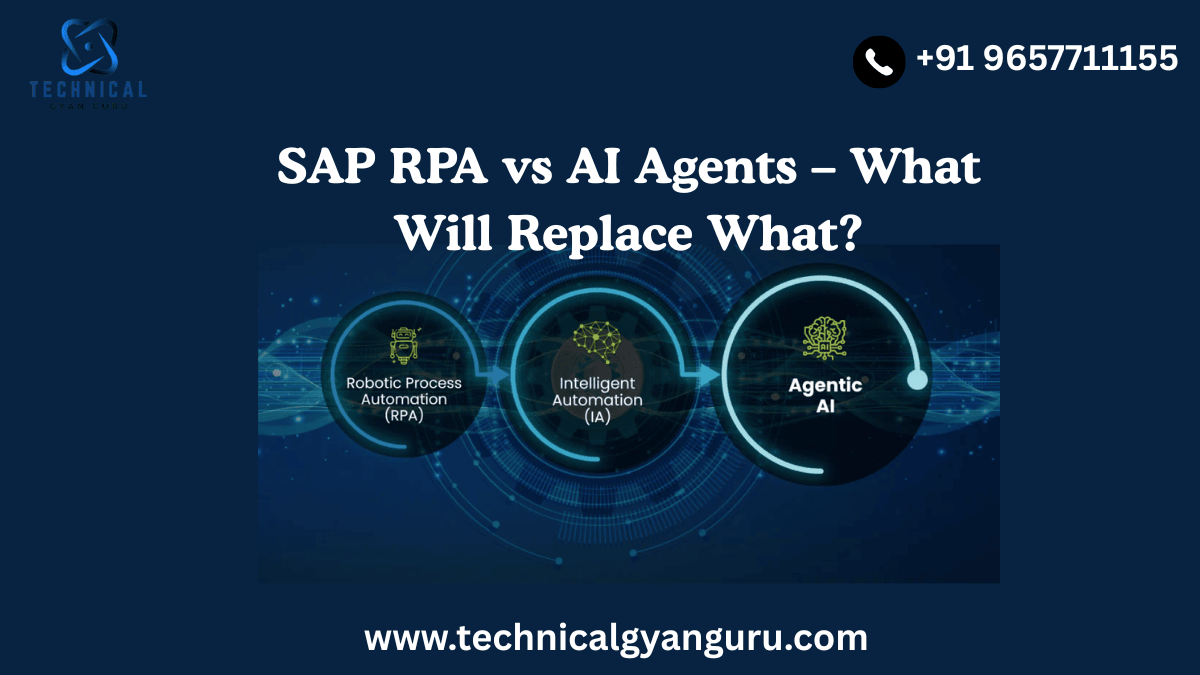
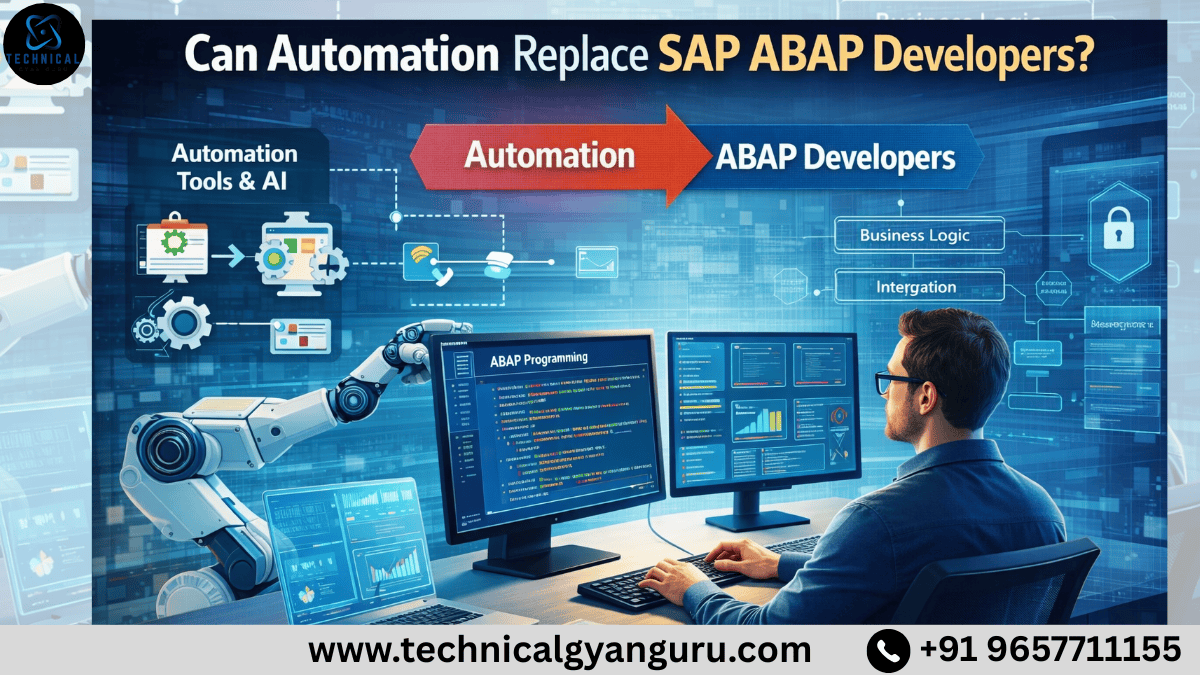
Automation inside enterprises is changing faster than ever. For years, SAP RPA helped companies automate repetitive business tasks. Today, a new concept is gaining attention—AI Agents. This has created an important question for beginners and professionals alike: SAP RPA vs AI Agents – what will replace what?
If you work with SAP, IT operations, finance, supply chain, or digital transformation, understanding SAP RPA vs AI Agents is critical. In this beginner-friendly guide, we’ll explain both technologies in simple terms, compare their real-world use cases, and clarify how they will coexist in the future.
Why This Comparison Matters in 2026
Enterprises are under pressure to reduce costs, improve efficiency, and adapt faster. Automation is no longer optional—it’s strategic.
SAP RPA vs AI Agents is not just a technical debate. It impacts:
• Job roles and skills
• IT investment decisions
• Business process redesign
• Career paths for SAP professionals
Understanding the difference helps you future-proof your skills.
What Is SAP RPA in Simple Terms
SAP RPA (Robotic Process Automation) is a rule-based automation tool. It mimics human actions like clicking buttons, copying data, and moving files between systems.
SAP RPA works best when:
• The process is repetitive
• Rules are clearly defined
• Inputs are structured
Example:
Automatically posting invoices in SAP S/4HANA from an Excel file.
This is why SAP RPA became popular in finance, HR, and procurement teams.
Strengths of SAP RPA
SAP RPA is reliable and predictable.
Key advantages include:
• No deep coding required
• Easy integration with SAP systems
• Strong governance and compliance
For stable business processes, SAP RPA still delivers excellent value.
Limitations of SAP RPA
However, SAP RPA has limits.
It struggles when:
• Data is unstructured
• Decisions require reasoning
• Processes frequently change
This is where the SAP RPA vs AI Agents discussion becomes important.
What Are AI Agents?
AI Agents are intelligent software entities that can understand context, reason, make decisions, and take actions autonomously.
Unlike RPA bots, AI Agents can:
• Read unstructured text
• Understand intent
• Learn from outcomes
• Adapt to new situations
Example:
An AI Agent that reads customer emails, understands the issue, checks SAP data, and resolves the request without fixed rules.
This intelligence is the key differentiator in SAP RPA vs AI Agents.
How AI Agents Work in Enterprise Systems
AI Agents combine:
• Large Language Models (LLMs)
• APIs and system access
• Workflow orchestration
• Decision-making logic
Instead of following scripts, AI Agents decide the next step based on context.
This makes them powerful—but also more complex to govern.
SAP RPA vs AI Agents: Core Differences
SAP RPA focuses on execution.
AI Agents focus on reasoning.
SAP RPA:
• Rule-based
• Deterministic
• Best for stable processes
AI Agents:
• Intelligence-driven
• Adaptive
• Best for dynamic workflows
This distinction defines how each fits into enterprise automation.
Real-World Use Case: Invoice Processing
SAP RPA Approach:
• Read structured invoice data
• Validate fields
• Post entries in SAP
AI Agent Approach:
• Read invoices in any format
• Understand exceptions
• Communicate with vendors
• Decide next actions
This example clearly shows SAP RPA vs AI Agents in action.
Will AI Agents Replace SAP RPA?
The short answer: No—at least not completely.
SAP RPA will continue to exist where:
• Compliance is critical
• Processes are standardized
• Predictability is required
AI Agents will lead where:
• Decisions are complex
• Human judgment is involved
• Data is messy or unstructured
The future is not replacement—it’s collaboration.
The Rise of Hybrid Automation
Modern enterprises are moving toward hybrid automation.
In a hybrid model:
• AI Agents handle understanding and decisions
• SAP RPA executes system-level actions
This combination delivers both intelligence and control.
SAP RPA vs AI Agents becomes SAP RPA plus AI Agents.
Impact on SAP Jobs and Skills
For SAP professionals, this shift is important.
Future-ready skills include:
• SAP process knowledge
• RPA design fundamentals
• AI and automation concepts
• Integration and APIs
Learning SAP RPA vs AI Agents helps you stay relevant rather than replaced.
Industry Trends Driving This Shift
In 2026, enterprises are:
• Embedding AI into ERP workflows
• Reducing hard-coded automation
• Investing in intelligent process automation
SAP itself is moving toward AI-powered business processes, reinforcing the importance of understanding SAP RPA vs AI Agents.
How Beginners Should Approach SAP RPA vs AI Agents
If you’re new:
• Start with SAP process fundamentals
• Learn SAP RPA for structured automation
• Understand AI Agent concepts conceptually
• Focus on business outcomes, not tools
This balanced approach prepares you for the future of enterprise automation.
Conclusion: What Will Replace What?
SAP RPA vs AI Agents is not a battle—it’s an evolution.
SAP RPA will not disappear, but it will no longer work alone. AI Agents will take over decision-making and cognitive tasks, while SAP RPA continues to execute structured actions reliably.
For beginners and professionals, the real opportunity lies in understanding how both technologies work together to drive intelligent automation.
Call to Action
Want to stay ahead in the automation revolution? Explore beginner-friendly guides, SAP automation courses, and AI-focused learning paths to master SAP RPA, AI Agents, and the future of intelligent enterprise automation.
you may be interested in this blog here:-
Can anybody know about mba in business analytics?