
 Varad
Varad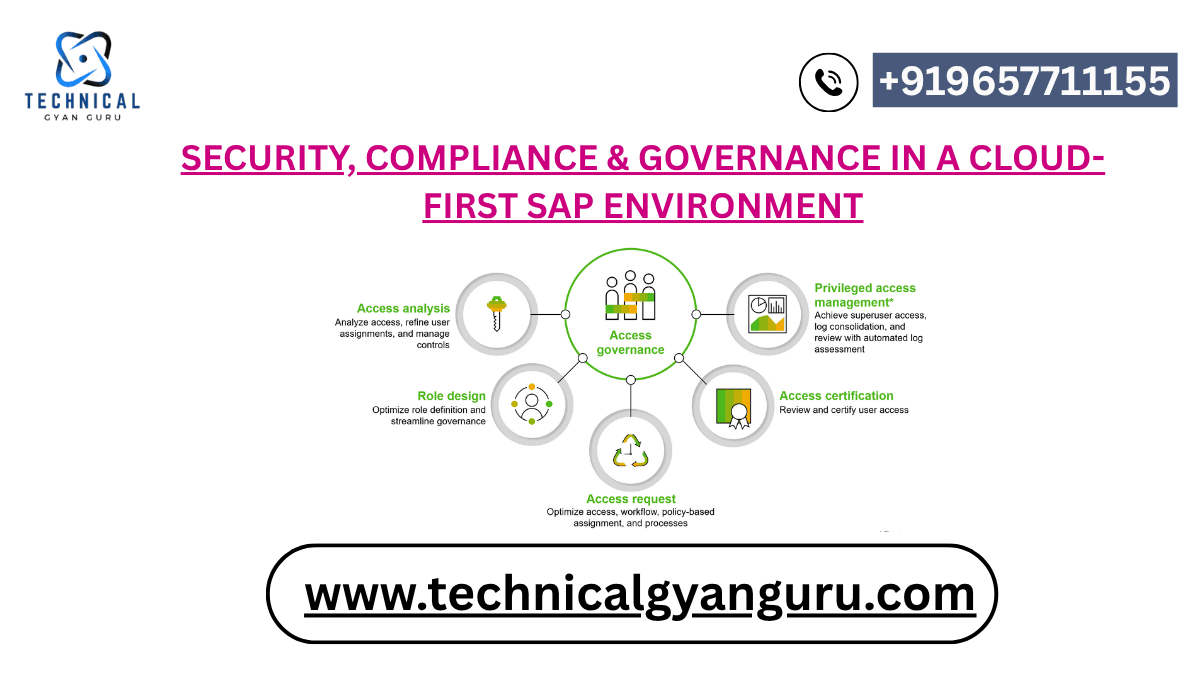
As businesses rapidly move toward cloud-first strategies, one question dominates boardroom discussions: how do we secure and govern the digital enterprise without compromising agility or innovation? For organizations running SAP systems—the backbone of enterprise operations—this question carries even more weight. The shift from traditional on-premise environments to cloud-hosted SAP solutions brings immense benefits such as scalability, flexibility, and cost-efficiency. Yet it also demands a renewed focus on security, compliance, and governance in SAP Cloud environments to protect critical data and ensure long-term business resilience.
In today’s hyperconnected world, data is the new currency. Companies rely on SAP systems to handle sensitive financial information, employee data, supply chain transactions, and customer records. As these workloads migrate to public and hybrid clouds, the security landscape evolves dramatically. Instead of a single, controlled data center, businesses now operate across multiple environments—each with unique risks and responsibilities. Cyber threats have become more sophisticated, regulatory frameworks more complex, and customer expectations for privacy and transparency more demanding. In this context, robust governance and compliance practices are not optional; they are foundational pillars for sustainable digital transformation.
The concept of security, compliance, and governance in SAP Cloud extends far beyond technical safeguards. It’s about establishing a culture of accountability, where every process—from data management to access control—is designed with protection and compliance in mind. SAP recognizes this and offers an ecosystem of cloud solutions built with enterprise-grade security at their core. Tools like SAP Cloud Identity Access Governance, SAP Data Custodian, and SAP Cloud ALM empower organizations to manage user access, monitor data usage, and ensure regulatory compliance seamlessly across hybrid landscapes.
One of the first steps in strengthening cloud security is understanding the shared responsibility model. In a cloud-first SAP environment, the cloud provider (such as SAP, AWS, or Microsoft Azure) manages the security of the infrastructure, including data centers, servers, and networks. However, the responsibility for data security, user management, and compliance policies remains with the organization. This means that even though your SAP system might be hosted on a secure cloud platform, your internal configurations, user permissions, and data governance practices determine the overall security posture.
Effective access management forms the backbone of any secure SAP cloud strategy. Controlling who can access what—and under what conditions—is critical to preventing unauthorized activities. SAP Identity Access Governance (IAG) enables organizations to automate user provisioning, enforce segregation of duties, and continuously monitor risk. For example, if a finance user in one region tries to access payroll data from another, the system can flag the anomaly or block access altogether. This not only protects sensitive information but also ensures compliance with global privacy regulations such as GDPR and CCPA.
Data protection is another crucial pillar of security, compliance, and governance in SAP Cloud environments. Businesses handle massive volumes of personal and financial data, and even a minor breach can have devastating consequences. SAP’s data protection frameworks are built to comply with international standards, offering encryption, anonymization, and secure audit trails. SAP Data Custodian, for instance, provides visibility into where your data resides, who can access it, and how it’s being used. This transparency is key to maintaining compliance with data residency laws and building trust with customers.
Cloud compliance, however, is not just about meeting regulatory checklists. It’s about continuous assurance—proactively identifying risks and proving that controls are effective. SAP provides compliance certifications aligned with ISO 27001, SOC 2, and other global frameworks, ensuring that its cloud services meet the highest security benchmarks. Yet, the real challenge for organizations lies in extending this compliance across their own operations, third-party integrations, and partner ecosystems. Using SAP Cloud ALM (Application Lifecycle Management), businesses can automate compliance monitoring, track audit activities, and align their governance models with both internal policies and external regulations.
Governance plays a unifying role in this ecosystem by defining how decisions are made, how risks are managed, and how compliance is enforced. In a cloud-first SAP setup, governance is about establishing standardized policies that align IT practices with business objectives. For example, defining clear data ownership roles, setting retention policies, and maintaining documentation for audit readiness all fall under effective governance. SAP Business Technology Platform (BTP) supports these objectives by enabling organizations to centralize their data management, analytics, and policy frameworks, ensuring that governance remains consistent across hybrid environments.
Emerging technologies are reshaping how enterprises approach cloud governance. Artificial intelligence and machine learning now play critical roles in detecting anomalies, predicting security threats, and automating compliance checks. SAP’s integration of AI within its security ecosystem allows companies to identify unusual access patterns, automatically remediate policy violations, and generate predictive insights into potential vulnerabilities. This shift from reactive to proactive security management is essential as cyberattacks grow more complex and frequent.
Another dimension to consider is the increasing relevance of multi-cloud and hybrid architectures. Many enterprises today use a mix of on-premise SAP systems alongside private and public clouds. This hybrid reality introduces complexity in monitoring, auditing, and enforcing compliance across diverse environments. SAP’s partnership with major hyperscalers like AWS, Azure, and Google Cloud addresses this by offering unified management tools that maintain consistent governance across all platforms. Whether your SAP workloads run in a private data center or across multiple public clouds, you can ensure that the same security and compliance standards apply uniformly.
Sustainability and ethical governance are also gaining traction within the broader conversation of security, compliance, and governance in SAP Cloud. Organizations are now expected not only to protect data but also to ensure ethical data usage and transparency. SAP Sustainability Control Tower and SAP Responsible Design and Production help businesses embed sustainability metrics into their governance models, linking compliance with corporate responsibility. This holistic approach reflects a growing understanding that trust, ethics, and sustainability are all part of modern enterprise governance.
Looking ahead, the importance of cloud security and governance will only intensify. With global data regulations evolving rapidly and cyber threats becoming more persistent, enterprises must embrace continuous learning and adaptation. SAP is already investing heavily in zero-trust architectures, quantum-safe encryption, and integrated threat intelligence to future-proof its cloud ecosystem. For SAP professionals and business leaders, understanding these advancements and implementing best practices is key to maintaining compliance and protecting business continuity.
The journey toward a secure, compliant, and well-governed SAP Cloud environment is not a one-time effort—it’s an ongoing commitment. Success depends on collaboration between IT, compliance teams, business leaders, and end-users. By building a culture of awareness, leveraging SAP’s advanced cloud tools, and aligning strategies with regulatory frameworks, organizations can create a robust defense that fosters innovation without compromising trust.
As your enterprise embraces the future of digital transformation, remember that true agility is built on a foundation of accountability and resilience. Security, compliance, and governance are not barriers—they are enablers that ensure innovation happens safely and sustainably.
If you’re ready to deepen your expertise in managing secure cloud environments, explore our advanced SAP cloud governance training programs and in-depth resources. Learn how to implement best practices, automate compliance, and lead your organization confidently in a cloud-first SAP world—because the future of enterprise success begins with secure, compliant, and intelligent governance.
you may be interested in this blog here:-
Demystifying the Duolingo English Test Fee: What You Need to Know
Career Journey as an Application Development Analyst at Accenture
Efficient Operations and Innovative Solutions with SAP Application Management Services