
 Varad
Varad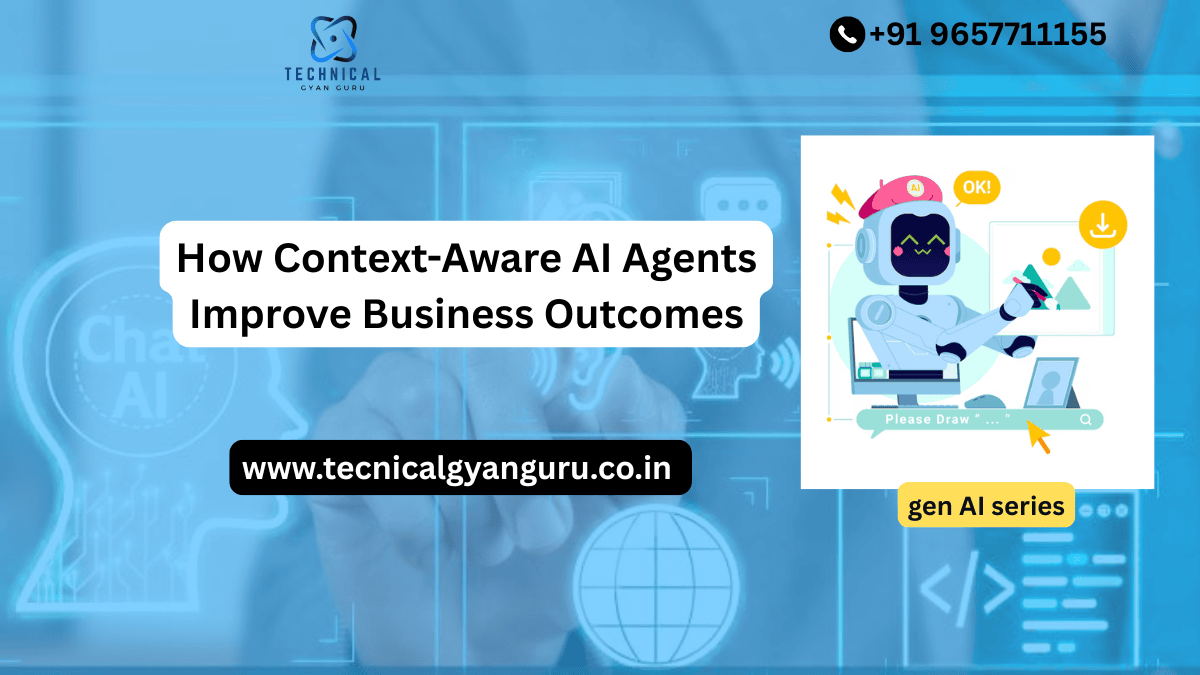
Every business leader has heard the promise of artificial intelligence by now, but the conversation has shifted in the last year. It is no longer about whether a company uses AI, it is about whether that AI actually understands the situation it is operating in. This is where context-aware AI agents come into the picture, and why they are quietly becoming one of the most valuable tools inside modern organizations.
Unlike traditional automation scripts or basic chatbots that follow rigid rules, context-aware AI agents are built to understand intent, history, and environment before taking action. They remember previous interactions, adapt to changing data, and make decisions based on the full picture rather than a single isolated command. That difference sounds small on paper, but in practice it changes everything about how businesses operate day to day.
In this article, we will break down what context-aware AI agents actually are, why they outperform traditional automation, and how companies across industries are using them to improve efficiency, customer experience, and revenue outcomes.
What Are Context-Aware AI Agents
A context-aware AI agent is a system that gathers and interprets relevant information from multiple sources before responding or acting. Instead of reacting to a single input in isolation, it considers things like user history, current business rules, external data, and the broader goal behind a request.
Think of the difference between a vending machine and a skilled personal assistant. A vending machine only responds to the exact button you press. A good assistant remembers your preferences, knows what you asked for last time, understands your schedule, and adjusts recommendations accordingly. Context-aware AI agents operate much closer to the assistant model, and that is precisely why they are reshaping business workflows.
How Context Awareness Changes Agent Behavior
Traditional software follows predefined logic. If input A happens, output B occurs, regardless of circumstances. Context-aware agents work differently because they factor in variables such as time of day, customer sentiment, past purchase behavior, current inventory levels, or even tone of a conversation.
This allows the agent to adjust its response dynamically. For example, a customer support agent might handle a billing question differently for a first time customer versus a long term client who has had repeated issues. The agent recognizes the pattern and responds with appropriate empathy, urgency, or escalation, something a static chatbot simply cannot do.
Why Businesses Are Investing in Context-Aware AI Agents
Companies are not adopting this technology because it sounds impressive in a pitch deck. They are adopting it because it solves real operational problems that have existed for years.
Reducing Repetitive Work Without Losing Accuracy
One of the biggest wins is the ability to automate repetitive tasks without sacrificing quality. Traditional automation often breaks down the moment a situation falls outside a narrow set of rules. Context-aware agents handle edge cases far more gracefully because they are reasoning through the situation rather than matching it against a checklist.
A logistics company, for instance, might use an agent to reroute shipments during a weather disruption. Instead of following a fixed protocol, the agent evaluates current traffic data, warehouse capacity, delivery deadlines, and customer priority levels, then makes a recommendation that fits the actual situation.
Improving Customer Experience at Scale
Customers today expect service that feels personal, even when they are interacting with a machine. Context-aware agents make this possible by remembering previous conversations, preferences, and unresolved issues. This means a customer does not have to repeat their problem three times across three different channels.
Retail companies have seen strong results here. A shopper who previously asked about a delayed order does not need to explain the situation again when they reach out a second time. The agent already has the context and can pick up exactly where the conversation left off, which builds trust and reduces frustration.
Supporting Better Decision Making for Employees
Context-aware agents are not only customer facing. Internally, they help employees make faster and more informed decisions. Sales teams use them to surface relevant account history before a call. Finance teams use them to flag anomalies based on historical spending patterns rather than fixed thresholds. HR teams use them to identify employees who may need additional support based on engagement trends over time.
The key advantage is that these agents do not just present raw data, they interpret it in relation to what has happened before, which saves employees from having to manually cross reference multiple systems.
Real World Examples of Context-Aware AI in Action
Financial Services
Banks are using context-aware agents to detect fraud with far greater precision. Instead of flagging every unusual transaction, these systems consider a customer’s typical spending behavior, location patterns, and recent activity before deciding whether something is genuinely suspicious. This reduces false positives, which means fewer legitimate transactions get blocked and customers experience less friction.
Healthcare Administration
Hospitals and clinics are applying context-aware agents to manage scheduling and patient communication. An agent might recognize that a patient has a history of missed appointments and proactively send a more detailed reminder, or it might notice a pattern of related symptoms across visits and prompt staff to review the case more closely before an appointment even begins.
E-Commerce and Retail
Online retailers use context-aware agents to personalize the shopping experience in real time. Rather than recommending generic best sellers, the agent factors in browsing history, cart abandonment patterns, seasonal trends, and even the customer’s typical price sensitivity. This leads to recommendations that feel relevant instead of random.
Software and SaaS Support
Technical support teams use context-aware agents to reduce resolution time. When a user submits a ticket, the agent reviews account configuration, recent error logs, and previous support interactions before suggesting a fix or routing the ticket to the right specialist. This cuts down on the back and forth that usually slows down technical troubleshooting.
The Business Outcomes That Actually Matter
It is easy to talk about AI in abstract terms, but business leaders care about measurable outcomes. Here is where context-aware agents tend to move the needle most.
Faster Resolution Times
Because these agents already understand the situation, they eliminate the need for repeated clarification. This alone can cut resolution times significantly in customer service and internal support functions.
Higher Customer Retention
Customers stay loyal to companies that make them feel understood. When an agent remembers context and responds appropriately, customers are far less likely to churn after a bad experience, because the experience rarely turns bad in the first place.
Reduced Operational Costs
Fewer escalations, fewer repeated interactions, and fewer manual reviews all translate into lower operational costs. Teams can handle higher volumes without proportionally increasing headcount.
More Accurate Forecasting and Planning
Because context-aware agents continuously process real time data alongside historical patterns, they help businesses make more accurate predictions around demand, staffing, and inventory needs.
How to Implement Context-Aware AI Agents Successfully
Adopting this technology is not as simple as installing a new tool. Businesses that see the best results tend to follow a few consistent practices.
Start With a Clear Use Case
Rather than trying to deploy a context-aware agent across every department at once, successful companies start with one clearly defined problem, such as customer support ticket routing or fraud detection, and expand from there once the system proves its value.
Ensure Data Quality and Access
Context-aware agents are only as good as the data they can access. If customer history is scattered across five disconnected systems, the agent will struggle to build an accurate picture. Investing in clean, centralized data is often more important than the AI model itself.
Keep Humans in the Loop
Even the most advanced agents benefit from human oversight, especially in the early stages. Businesses that build in review checkpoints for high stakes decisions, such as financial approvals or medical scheduling, tend to build more trust internally and avoid costly mistakes.
Continuously Monitor and Refine
Context changes over time, and so should the agent’s understanding of it. Regularly reviewing agent decisions and feeding back corrections helps the system stay aligned with real business needs rather than outdated assumptions.
Common Mistakes to Avoid
Many businesses rush into AI adoption without a clear strategy, and that usually leads to disappointing results. A few mistakes come up repeatedly.
Treating context-aware agents like simple chatbots and expecting instant perfection without proper training data.
Ignoring privacy and compliance requirements when agents access sensitive customer information.
Failing to define clear escalation paths for situations the agent cannot confidently handle.
Underestimating the importance of ongoing maintenance once the system is live.
Avoiding these pitfalls early on saves significant time and budget down the line.
The Future of Context-Aware AI in Business
As these systems continue to mature, the gap between businesses that use context-aware AI effectively and those that do not will likely widen. Customers are becoming more accustomed to fast, personalized interactions, and internal teams are growing to expect tools that actually understand their workflow rather than adding extra steps.
The businesses that succeed with this technology will not necessarily be the ones with the biggest budgets, but the ones that implement it thoughtfully, starting with clear goals, clean data, and a willingness to refine the system based on real world results.
Final Thoughts
Context-aware AI agents represent a meaningful shift away from rigid automation toward systems that genuinely understand the situations they are dealing with. From reducing customer friction to helping employees make smarter decisions faster, the impact on business outcomes is measurable and growing.
Companies that take the time to implement these agents correctly, with a focus on data quality, clear use cases, and ongoing refinement, are already seeing the benefits in retention, efficiency, and customer satisfaction. As adoption grows, context awareness will likely shift from being a competitive advantage to simply being the standard expectation for how businesses operate.